
Kickoff recap · Sovereign AI · 1:20 p.m.
A vast amount of geospatial data exists. Very little of it reaches the person who needs it when something breaks.
She joined as a Canadian living in Alaska, with perspectives of her own, and picked up the geospatial thread from the talk before hers.
Her story was a door stuck closed. An earthquake can do it. So can a house built on permafrost, or a single frost heave, not only seasonally frozen ground. As a homeowner, she said, the geospatial record has often known about the movement for a long time. The question is whether that information gets back to the person and turns into action. Too often it goes straight to the insurer.
NASA's NISAR products already track ground movement. The issue is not only whether the house is moving, but the ground around it. Did somebody know? Could they say so? And if they do, what happens next?
Communities have plenty of data. From the jurisdictional side, much of it is still not connected, and that has been known for a long time. New systems need common protocols across people who govern themselves: individuals, municipalities, tribal nations, and state and federal governments, while research in those places is still underway. The design question is how authority stays with the participants.
AI agents arrive with access to compute, data, and tools, and the coordination problem is already there. Cognitive offloading, as she used it, is the habit of handing thought to the model. The other half is being deliberate about who the system does more for, and keeping the ability to question a finding and to know how.
Simple surveys may be public. Someone still publishes the finding, and someone still decides what happens next.
For Canada in 2080, she sees room for new frameworks, and a lot in common with the conversations already underway in Alaska. Her work has been building information networks from community conversations, and folding community planning into the system itself. She offered four tests of control.
- Contestability. Can the people, communities, or institutions affected contest or refuse a consequential decision?
- Dependency. Can participants operate, interpret, maintain, and negotiate without one vendor or one expert?
- Value intention. Are community assets strengthened or extracted?
- Adaptability. Can institutions and communities exit, provide, substitute, or repair?
Her suggestion: the volume of data is also an opportunity. Start from how the system should function, what actions it performs, and the tacit knowledge people already hold. The data is easier to organize from there, and AI makes that planning more useful.
Full Transcript
Cleaned up transcripts.
Keynote
Thank you, everybody, and happy to be joining you as a Canadian living in Alaska. This morning, I have perspectives of my own.
Canada is a massive place, and I appreciate that a lot, especially with my time studying and implementing some of my work here on this side of the border. But I appreciated the previous presentation's discussion on geospatial data. I want to tell you some stories about my work and the perspectives I'm bringing.
I gave a presentation last week that resonated well in Alaska. It was about what happens when your door is stuck closed. This can happen for a variety of reasons. We have major earthquakes here that can disturb structures, and we also build houses on permafrost. It doesn't have to be our seasonally frozen ground that causes issues; it can also be a single frost heave.
I can tell you right now, as a homeowner, what happens when you have to deal with it. From the geospatial perspective, we have known quite a bit for a long time, but whether that information makes it back to you and translated into action is a key perspective to consider, especially in this AI era.
Right now, a lot of communities have data. We have analysis-ready products by NASA called NISAR that track ground movement. It's a bit tricky because it's not only about whether your house is moving, but also the area around it. The main idea is: Did somebody know? Could they tell you about it? And if they do tell you, what happens? Often, we go straight to deferring to insurance companies to insure this, but we frequently don't bring the information back to the homeowners and to the actions that need to happen.
This is the point where I often want to start by centering our work, especially centering our thoughts around adopting AI and what our new information systems can look like in the future. The answer is that we have tons of data, but from the jurisdictional side, a lot of it isn't connected right now, and we've actually known this for quite some time.
When thinking about these systems, you really have to consider how to develop common protocols across independently governed systems. We need to acknowledge the variety of participants, such as individuals, municipalities, tribal nations, and state and federal governments, while also recognizing that active research is still occurring in these spaces. How do we design these systems while understanding how authority is retained among participants?
In AI, we need shared protocols, especially as we start to introduce new tools like AI agents, which means they have access to compute resources, data, and tools. How do we fit these new things in? We've often had a coordination problem in these areas. As humans, we are doing the best we can, trying to make data simpler, more accessible, and easier to understand. But fundamentally, there are many things going on, and most of us have to manage many different details all at once.
I go back to this idea of cognitive offloading. For all we think about AI, we consider how we are offloading our thoughts to AI, to the systems around it, and to the machine learning models that represent the data better. But the flip side is that we haven't thought enough about how to be more critical and deliberate: how, within the relationality we choose to manage our issues, we decide who we want to do more for.
Going back to the home example, this can include local observations and evidence. If you know you might have an issue because systems are designed better to inform you, or if you have sensors installed on your house, who owns those? Do you understand the data yourself? Regarding surveys, specialized satellite data is available, but it comes down to this core concept: when there is a finding about something important to you, how have you ensured that the system flags it so somebody tells you, while you retain the ability to question it and know how to do so?
It circles back to the idea of authority. Often, simple surveys may be public, but who publishes the findings? Who decides what happens next?
When I think about Canada in 2080, there are many things to consider when designing systems right now because there are opportunities for new frameworks. However, there are many commonalities with the conversations we are having in Alaska. When thinking about these systems, especially the geospatial components, we've been designing new information and knowledge networks directly inspired by community conversations that have already taken place. We have been thinking about the intersections between the socioeconomic environment and institutional connections.
One thing we've been doing in our work is thinking about how to formalize community planning measures that need to be embedded in our information systems going forward. As a start, we have been including tests focused on four elements of control.
Contestability. Can affected communities, individuals, or institutions contest or refuse consequential decisions? This is a key starting point.
Dependency. Can participants operate, interpret, maintain, and negotiate without relying on a single vendor or expert? In other words, how resilient is the system?
Value intention. Are community assets strengthened or extracted, and what does that look like?
Adaptability. Can institutions and communities exit, provide, substitute, or repair?
A lot of thought has gone into these types of planning frameworks. If I can offer one suggestion, it's that it is easy to look at all the data and feel overwhelmed, but you should also view it as an area of opportunity. When you start from how you want your systems to function, what actions those systems perform, and the tacit knowledge people hold to define the problems, it becomes much easier to organize the data. Especially with our use of AI right now, we can perform much better planning. These are key opportunities for Canada in envisioning what the future looks like. Thank you.
Panel
Francis Wang asked the remote speakers for observations from abroad.
Can you offer observations from abroad, or from other communities, that Canada should adopt?
Dr Erin Trochim.
I saw a news story that came out of Australia. I believe it was last week. It was talking about how Australia is also considering construction. We start with the reminders there: look at the Australian laws, look at the energy being used in the Australian data centres, and look past a lot of the Australian context to how it developed in that country. There is a lot of information flowing from other places right now, and those can be helpful perspectives to consider.
It goes back to my point. How it looks in your backyard, in your country, matters. It is important to understand what that looks like, to take part in those discussions, and to help those decisions.
At the kickoff
-
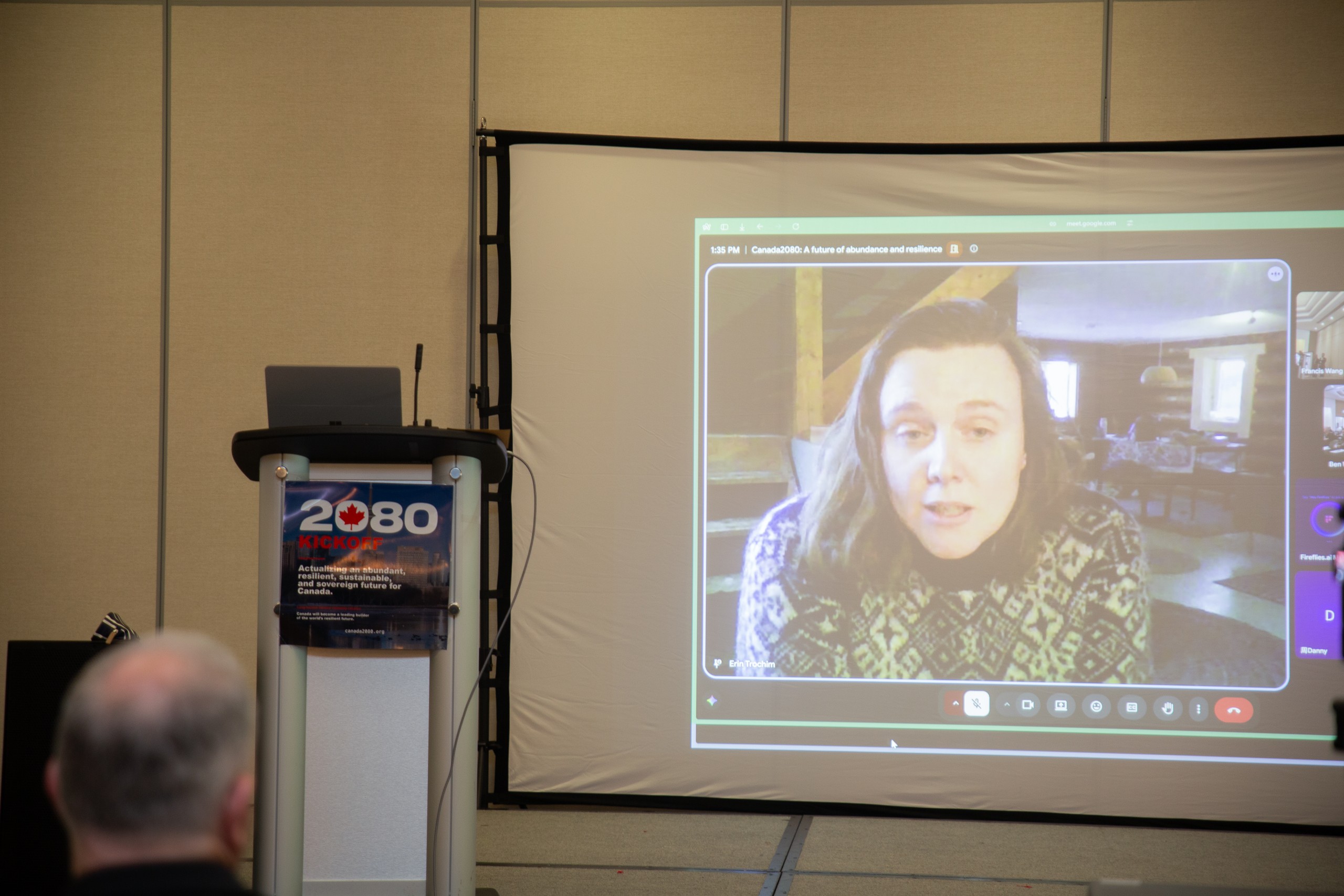 On the screen.