
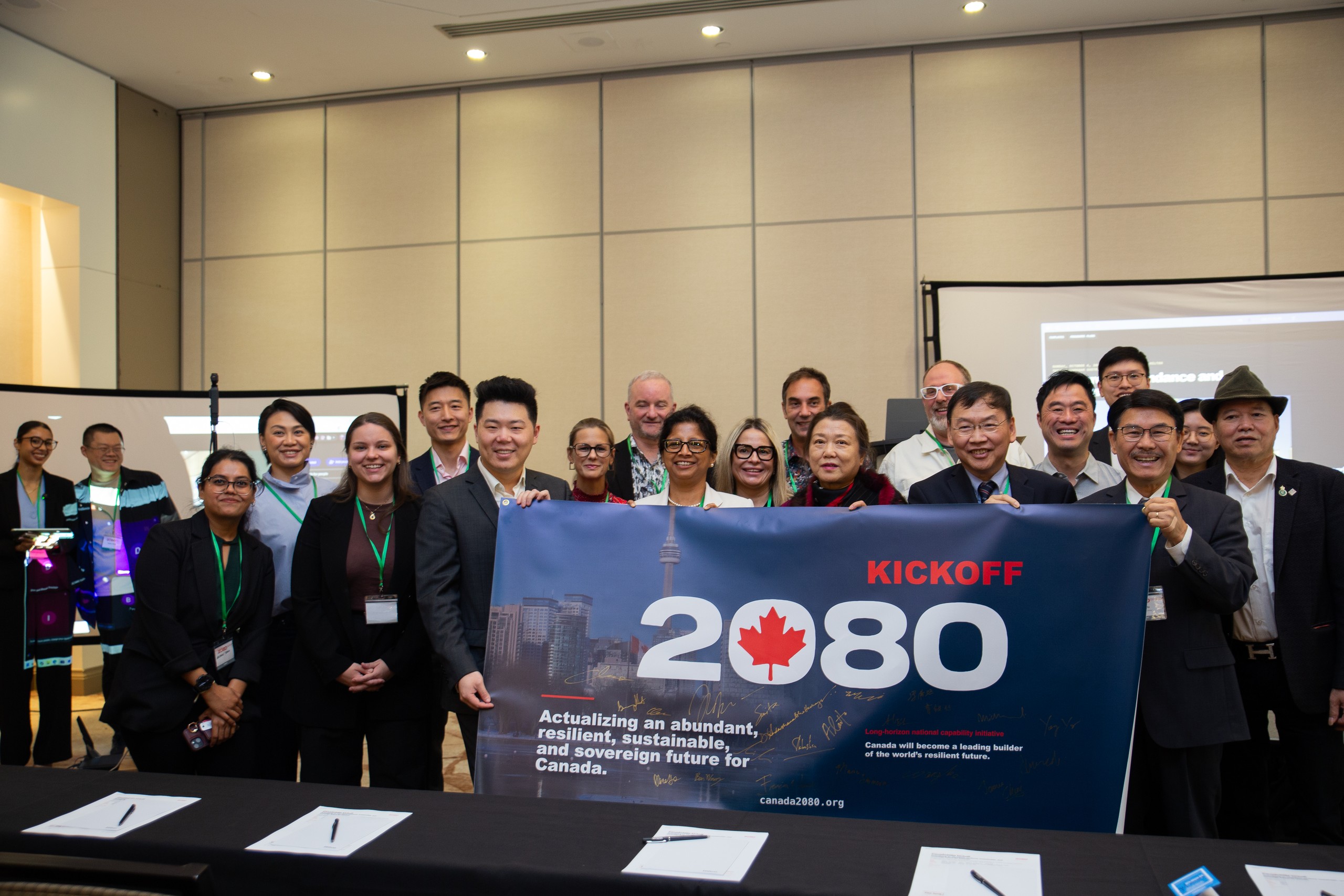
Sunday, 4 October 2026 · Markham Ballroom
Canada is
the future.
Actualizing an abundant, resilient, sustainable, and sovereign future for Canada.
Event highlights
-
The future is not guaranteed. It is made.
Soaring technology and thriving communities are a picture, not a promise. Abundance has to be shared, and resilience built deliberately.
Alan Ho
-
Canada is the future of the planet.
By 2080, 3.8 billion people would be living outside a historical climate niche and would need to go somewhere. He said Canada will host the world's people.
Francis Wang
-
Start Monday.
Easy problems should be solved. The country's potential is not one of them. Know where you are going, know where you are without romance, and begin that way on Monday.
Greg Hart
-
We burn an area the size of Nepal, every year.
In Alberta's boreal forest, that is 16.5 million hectares and $9.9 billion at stake each year. Indigenous communities who live there are most affected. The timber industry is hit hardest.
Dr Sudarshana Bhattacharya
-
Sovereign for whom?
The usual question is who owns the compute, the data, and the models. She asked who decides, who benefits, and who is still responsible once the project has ended.
Dr Kimberly Yazzie
-
Scale it here.
Three Alberta firms he worked with, making trailers, surgical tools, and activity monitors, reached the next scale by being sold. The buyer designed the generation after that.
Barry Wylant
-
Canada has everything.
The horizon she sees is 2040 or 2050, not 2080. Canada already has the land, the talent, the technology, and the manufacturing resources to lead the build.
Yulia Korobkova
-
Resilience as the baseline.
Systems he has watched for ten years deliver almost none of what they promise. Four days in winter, the power out, and no food coming in, is how he asks whether we are ready.
Dr Michael Donaldson
-
Canada is known for being first to be second.
A country described that way would have to decide it wants to lead. Next spring, Alberta may still choose a conventional train.
Sebastien Gendron
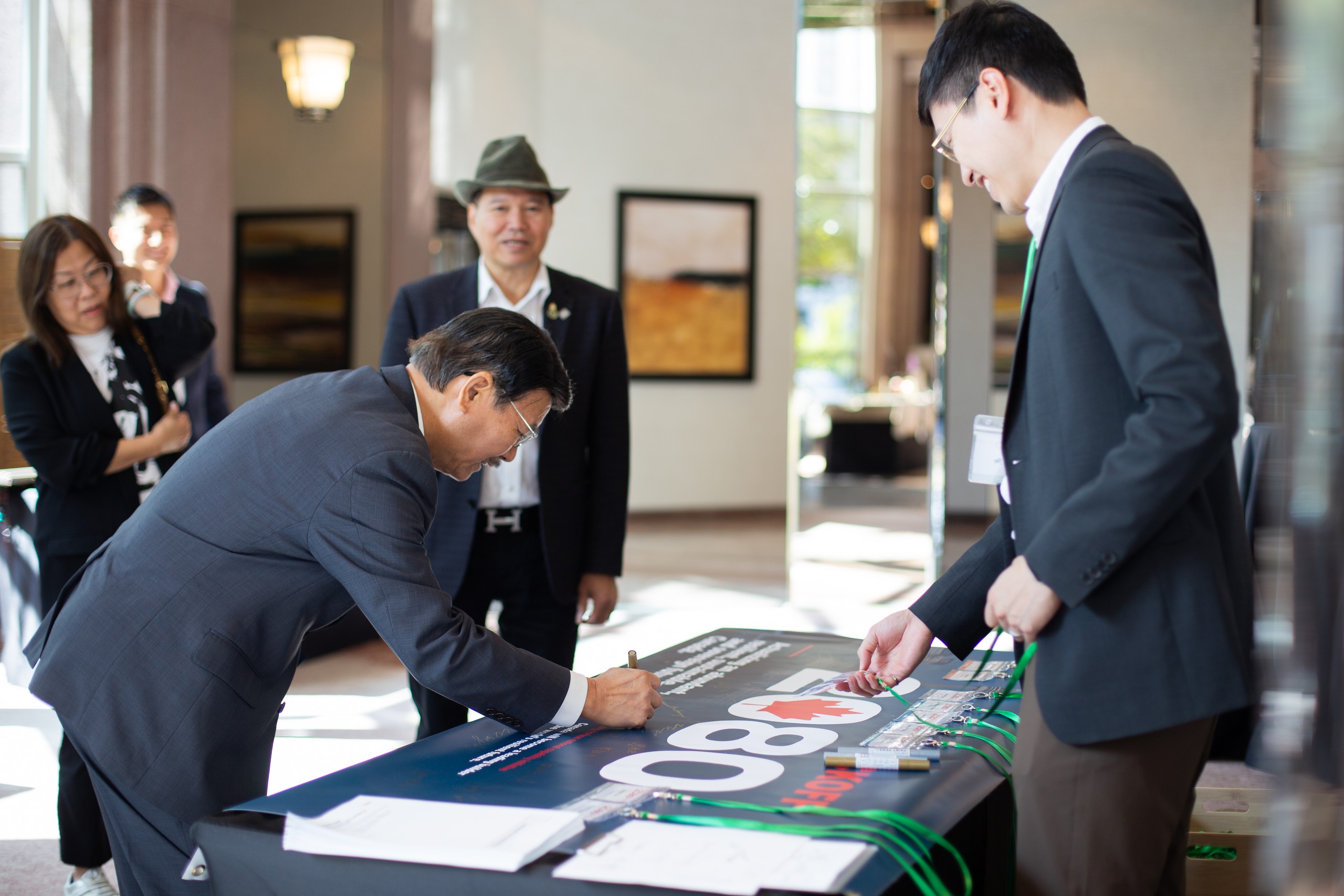
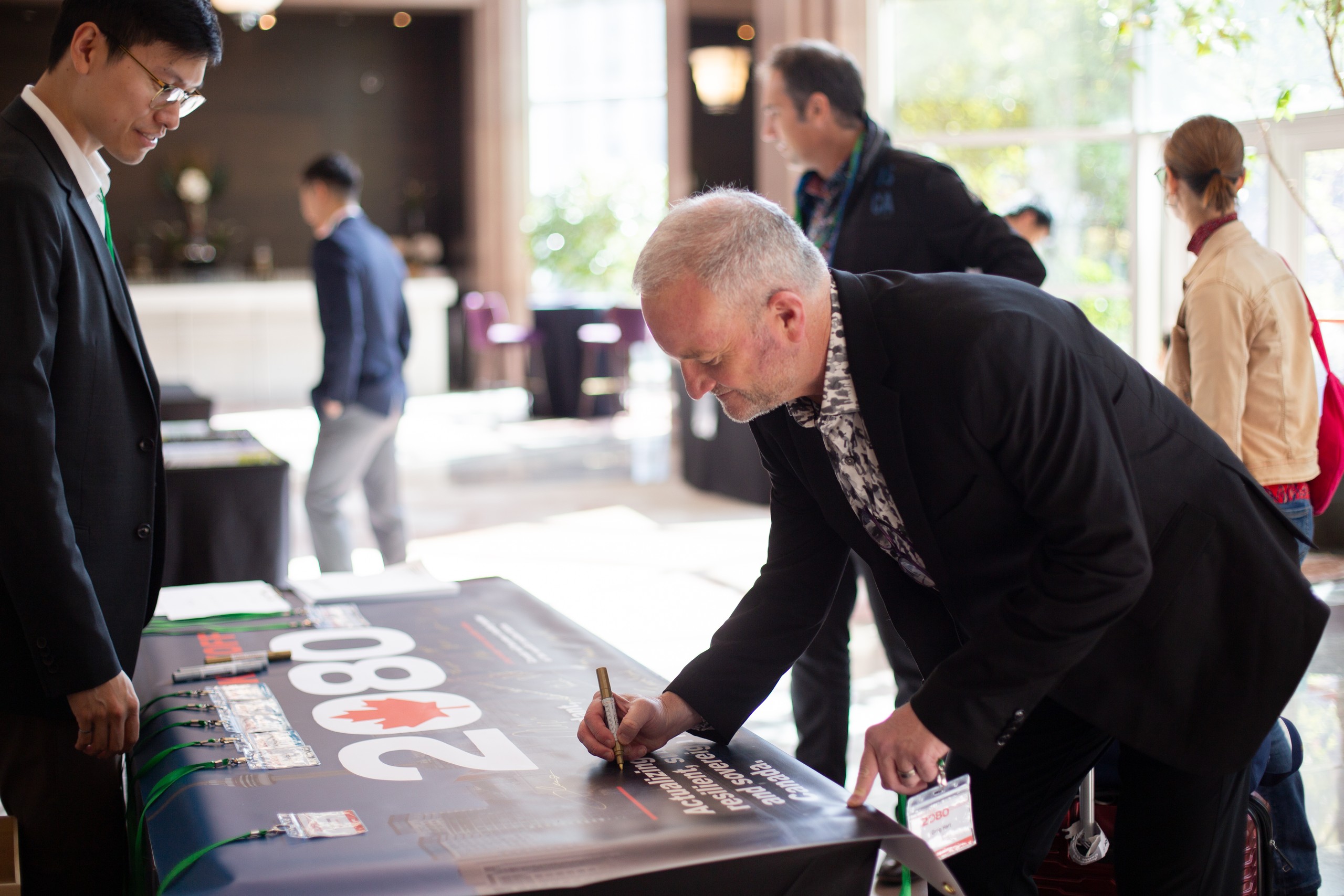
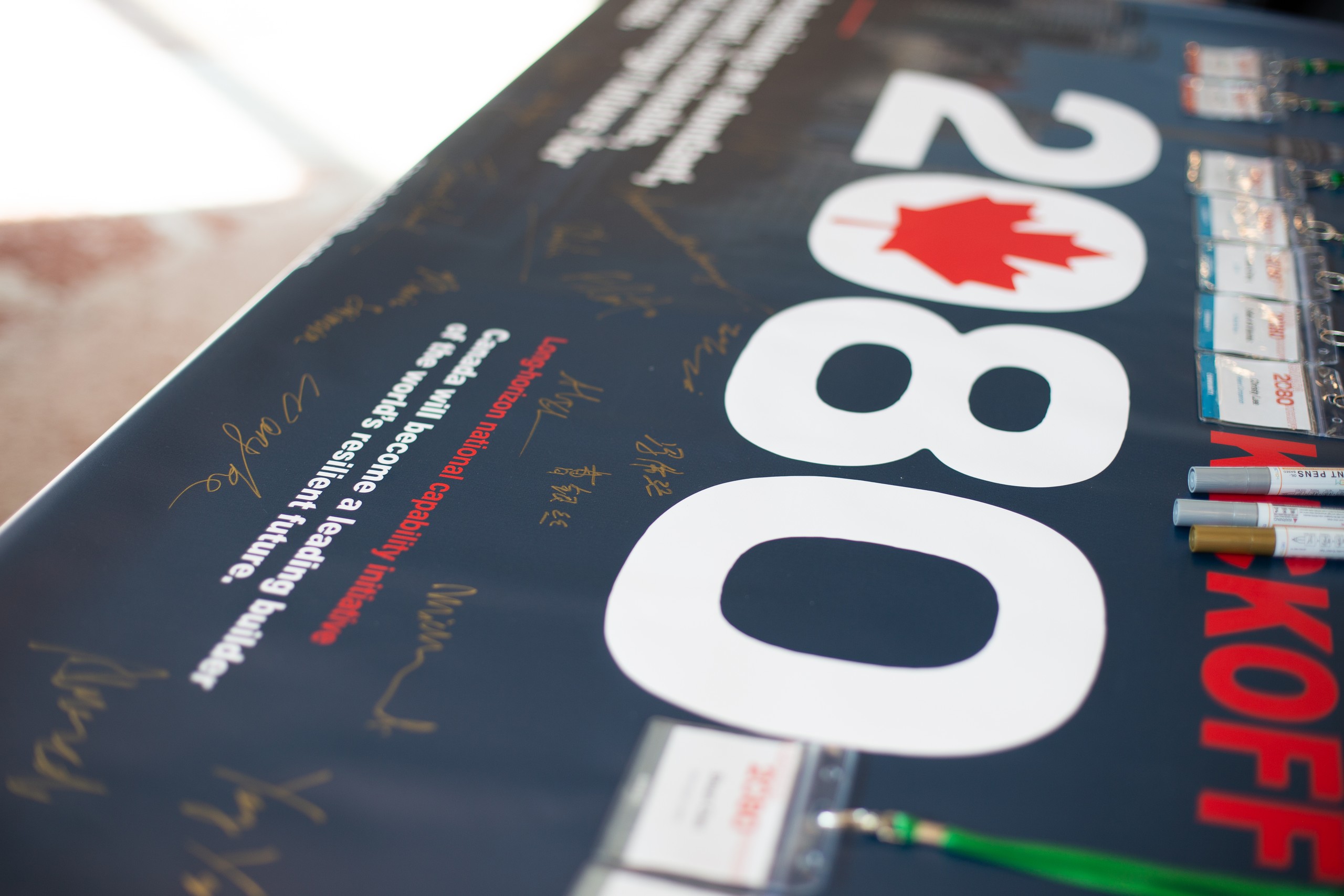
Signing the initiative
-
12:30 p.m.
Before the first word.
Guests were checking in, in person and online.
Francis Wang hosted. Kritika Saihgpaul was master of ceremonies. At 1:00 p.m. she began with the City of Markham land acknowledgement.
We begin today by acknowledging the traditional territories of Indigenous peoples and their commitment to stewardship of the land. We acknowledge the communities in circle. The North, West, South and Eastern directions, and Haudenosaunee, Huron-Wendat, Anishnabeg, Seneca, Chippewa, and the Mississaugas of the Credit peoples. We share the responsibility with the caretakers of this land to ensure the dish is never empty and to restore relationships that are based on peace, friendship, and trust. We are committed to reconciliation, partnership and enhanced understanding.
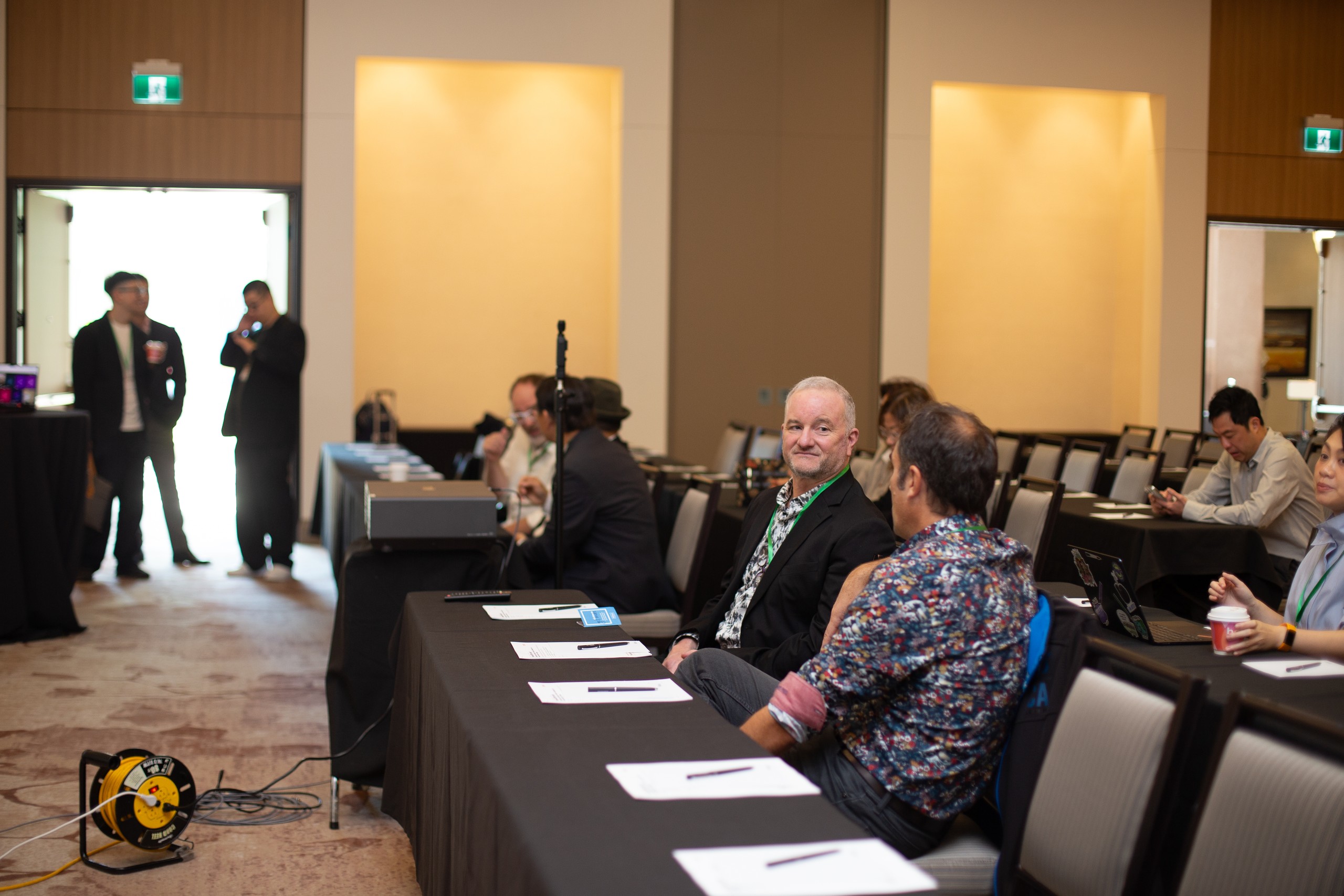
Guests in the Markham Ballroom before the programme. Hilton Toronto/Markham Suites Conference Centre. -
1:05 p.m.
The future is not guaranteed.
Alan Ho
York Regional Councillor for the City of Markham. Chair of the Culture and Economic Development Committee.
He opened the afternoon.
The welcome was about 2080: a future of abundance and resilience. Soaring technology, cleaner energy, longer lives, and thriving communities are a picture, he said. They are not a promise.
Abundance has to be shared. Resilience has to be built on purpose. Both depend on choices made now.
- Protect water, parks, and climate.
- Plan housing and transit for every generation.
- Take up innovation, and still safeguard dignity.
- Strengthen local food, health, and social connection.
Resilience, in his definition, is more than surviving a shock. It is adapting, recovering, and growing together. Abundance is more than having more. It is enough opportunity, and enough hope, for everyone.
He pictured Markham, and places beyond it, where seniors are supported, young people can afford to stay, newcomers belong, and neighbourhoods stay green and safe. That, he said, takes courage, collaboration, and a longer view than the next political cycle. Imagine boldly, plan wisely, and act together, toward a future of abundance and resilience for all.
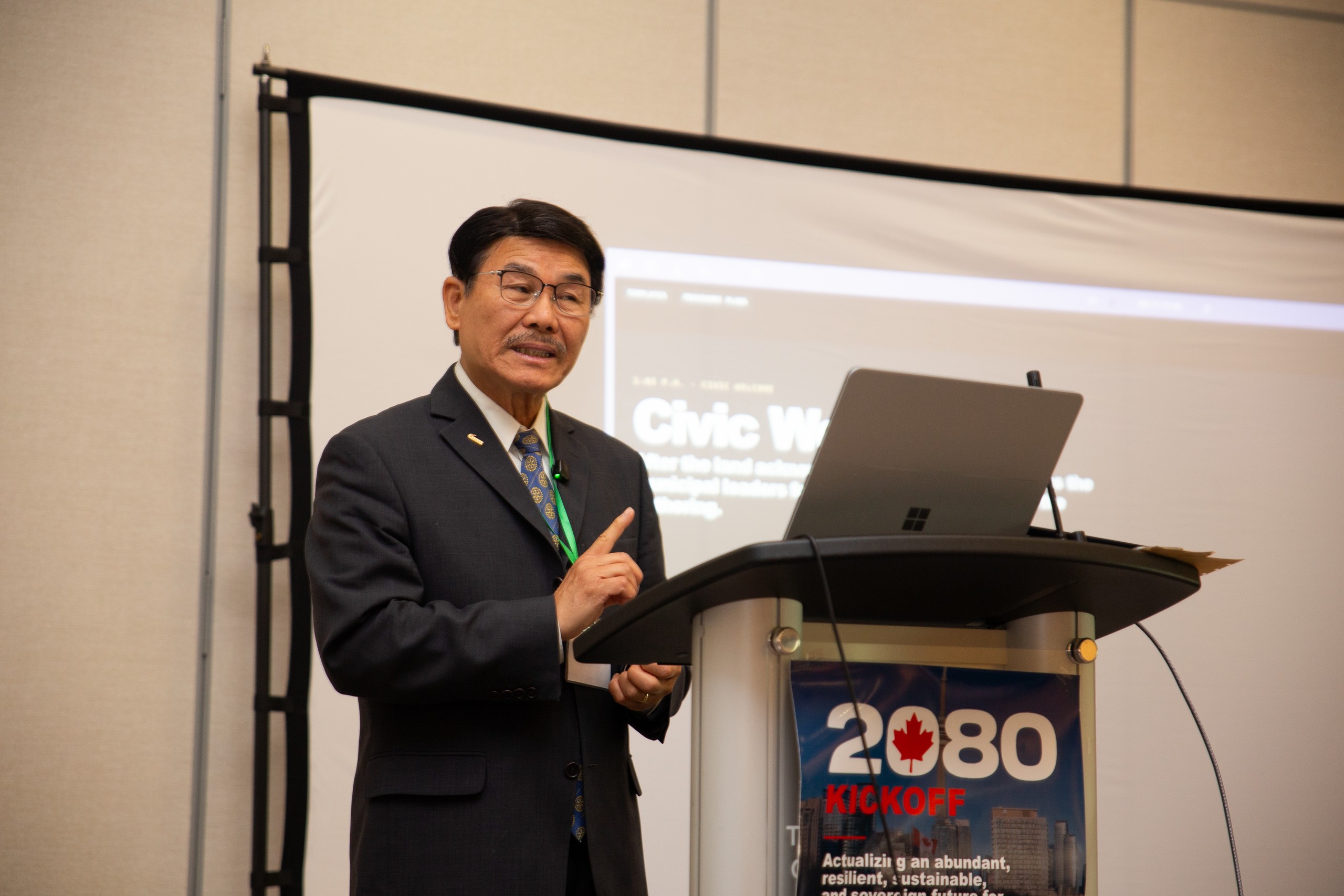
Opening the civic welcome. The future he described is not guaranteed. It is made. 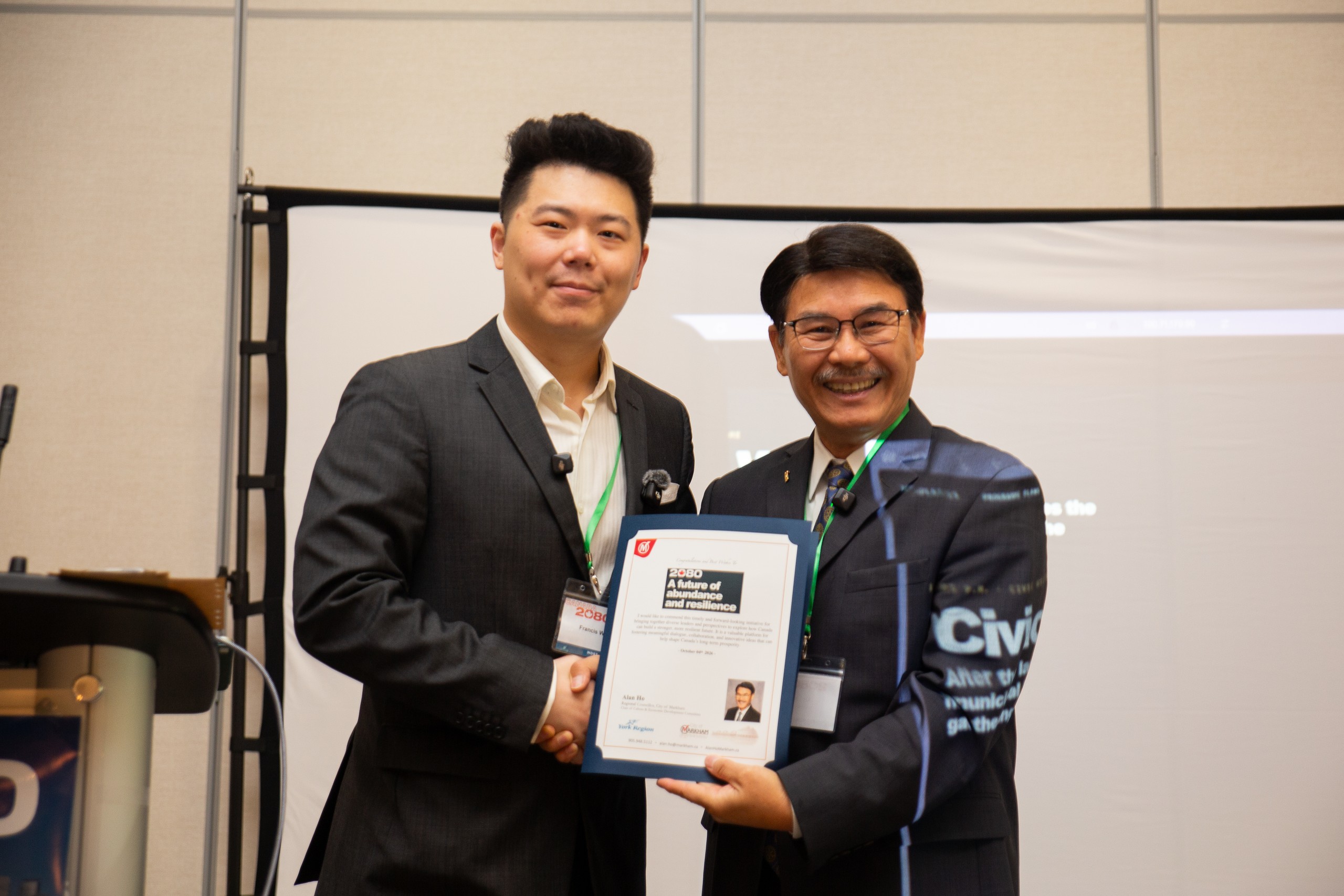
With Francis Wang and the City of Markham proclamation. Abundance has to be shared, and resilience has to be built on purpose. -
1:10 p.m.
Canada is the future of the planet.
Francis Wang
Opening keynote, Canada2080: the long-horizon challenge.
He called it a kickoff, not a multi-day launch.
Canada2080 is a long horizon: gather people who believe in similar possibilities, and hold the conversations again. The claim he set out is that Canada can be one of the most prosperous nations by 2080, and that Canada is the future of the planet.
Looking back from that year, 3.8 billion people would be living outside a historical climate niche and would need to go somewhere. The movement, on the equal-earth map, is north. He said Canada will host the world's people.
What is already here is land, freshwater, materials, clean power, and research. What leaves is the capability. Firms struggle to scale, intellectual property and educated people go elsewhere, and raw materials are sold instead of becoming supply chains.
What he asked the room to build: resilient living systems, manufacturing, an integrated supply chain, and domestic chips. AI and infrastructure, he said, are the same problem on different clocks. He quoted Carney: "Controlling our energy means controlling our destiny."
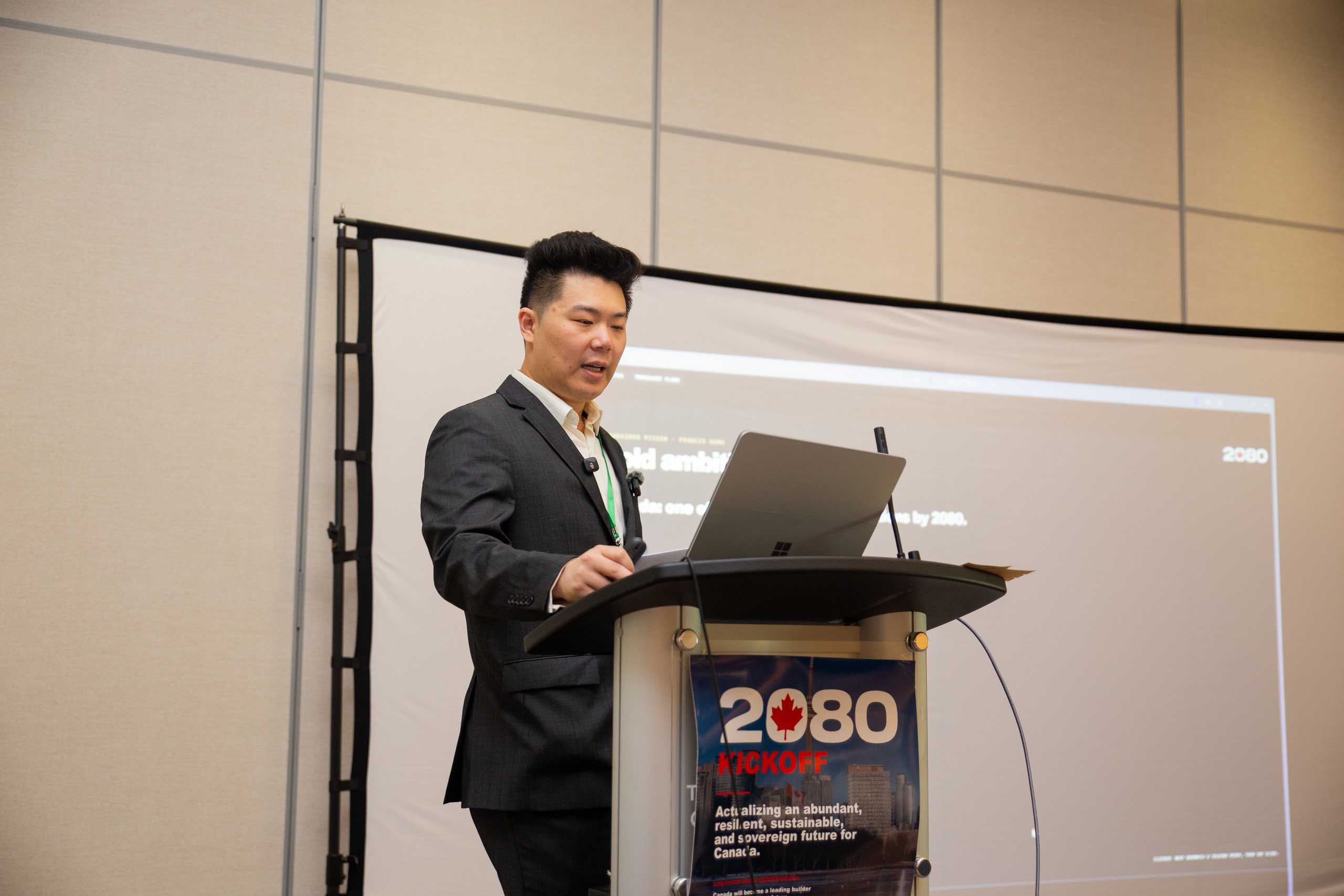
On the long-horizon challenge. By 2080, he said, Canada will host the world's people. -
1:20 p.m.
Sovereign AI, close to the problem.
Kritika Saihgpaul introduced the set. Five speakers followed, each bringing sovereign AI close to a problem already in front of someone.
- Dr Sudarshana Bhattacharya: wildfire in Alberta's boreal forest, and a picture of what is at stake that can be built on data held here.
- Dr Kimberly Yazzie: who decides, who benefits, and who is still responsible once the project has ended.
- Dr Erin Trochim: the data has to reach the person when the door is stuck closed.
- Sunita Kumari: where the data resides, who can see it, and who answers for the outcome.
- Pyn Lim: a verified record of care that stays with the patient.
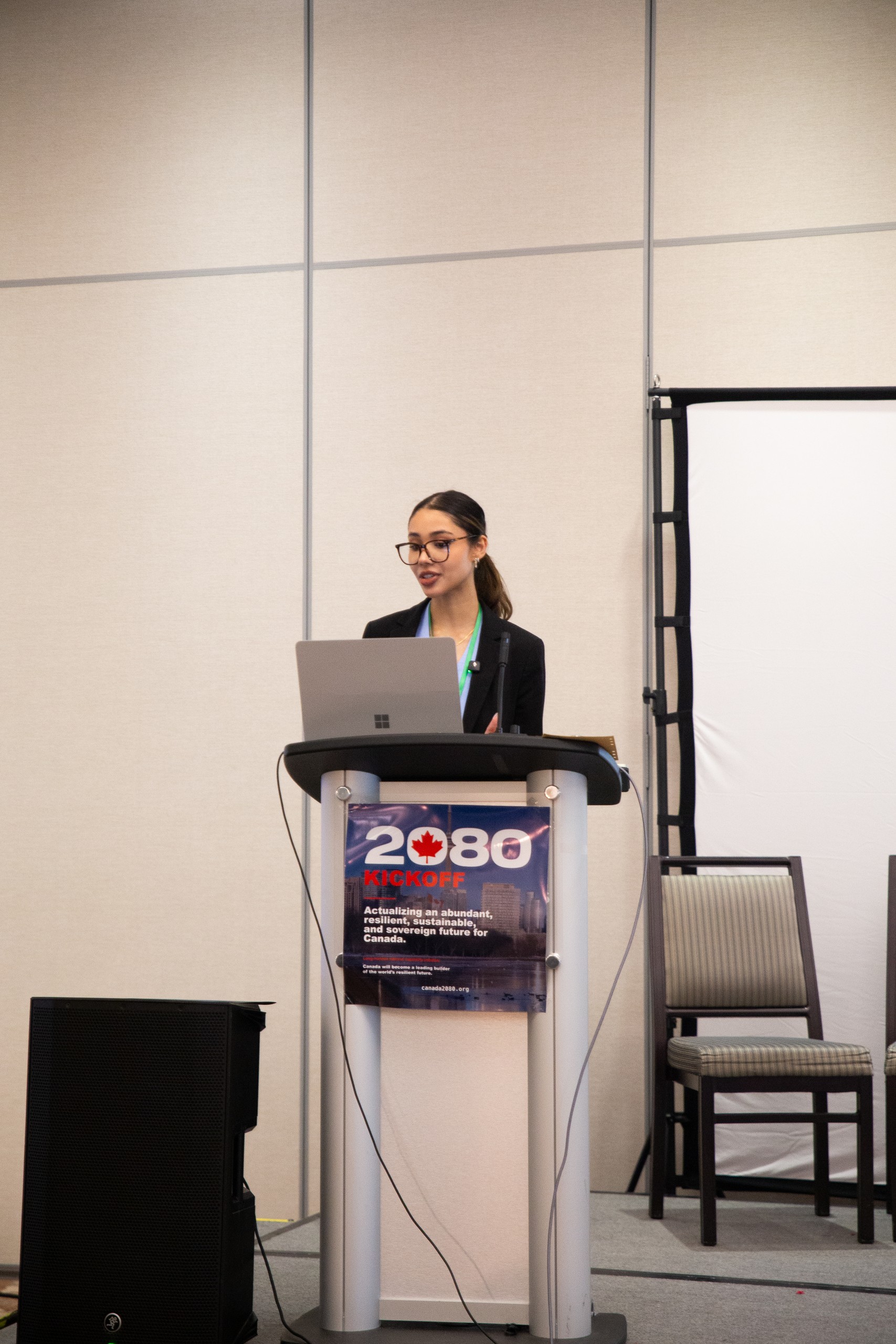
Master of ceremonies, bringing the room from one speaker to the next. -
Dr Sudarshana Bhattacharya
LinkedIn Full Transcript Panel
She had just graduated from Golden Gate University. At work she is a senior director analyst. She kept the remarks on what Canada already has, and on one urgent problem that returns every year: wildfire in Alberta's boreal forest.
Her geographic context: every summer, wildfire burns an area the size of one Nepal. She put the numbers at 16.5 million hectares and $9.9 billion at stake each year. Indigenous communities who live there are most affected. The timber industry is hit hardest.
AI, as she used the word, is not only ChatGPT. She dated the field at 70 years, and said that older practice does not need the compute that GPT models or Gemini need. That gap is where her research sits.
The thesis architecture has two layers.
- A foundation pulls the data together and cleans it. She said that step does not need the compute people assume.
- An intelligence layer starts with Random Forest, which she said can run on an ordinary computer, then a convolutional network that tries to see the way an eye does, then an ANN that brings the parts together.
The aim is a calculated dollar figure for forest-fire exposure. She would implement it with small, domain-specific language models, using Natural Resources Canada and Statistics Canada. Geospatial data is the hard remaining set. She has a project charter she is offering to anyone in a master's programme who wants to run the work as a capstone, end to end, inside a small language model. Some Copernicus satellite data from Europe may still be needed. The doctorate, she said, was not the point. The point is a usable picture of what is at stake, built as much as possible on data held here.
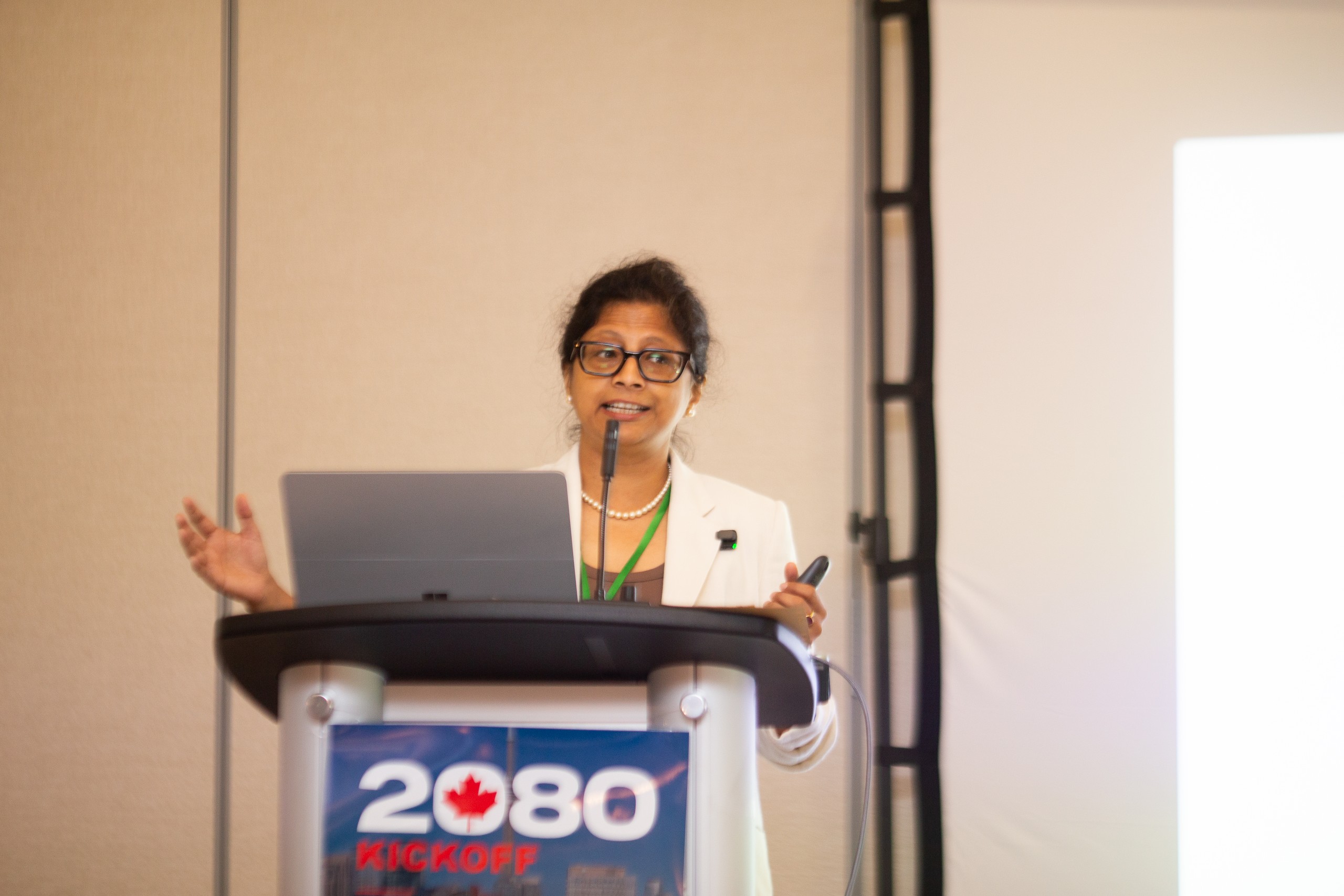
On wildfire in Alberta's boreal forest: an area the size of one Nepal, every year. -
Dr Kimberly Yazzie
Joining remotely, she spoke in her own capacity, not on behalf of her institution. Sovereign AI, she said, is usually who owns the compute, the data, and the models. She asked a different question: for whom?
For Indigenous communities, she said, AI is a question of relationships. Who decides, who benefits, and who carries the responsibility after a project ends. Satellites and sensors can be a tool for care. Built without the people of that land, they can become a way of watching them. It is not her place to speak for any community. Indigenous data sovereignty and early engagement, she said, deserve real support.
Every community can take up a new technology, or not, on its own terms. When it steps in, education and partnership start with the first conversation.
Two commitments make that choice meaningful.
- Consent that stays open. Free, prior, and informed consent is an ongoing relationship, not a checkbox. A community can revisit its choice, and data stays under the authority of the community it describes.
- Accountability to relationships, not just outputs. AI has to move with Indigenous governance, not in a direction set only from the outside.
She cited the UNESCO Recommendation on the Ethics of Artificial Intelligence, the first global standard its member states adopted: Indigenous peoples must take part in shaping AI, and the task is to make room for that in practice. Her proposal is to begin with the partnership, not a product. Build the education, the trust, and the governance together, and then see where the relationship goes. Technologies and data will change. What endures, she said, are the relationships carried forward by each generation. Her link dropped before the panel question.
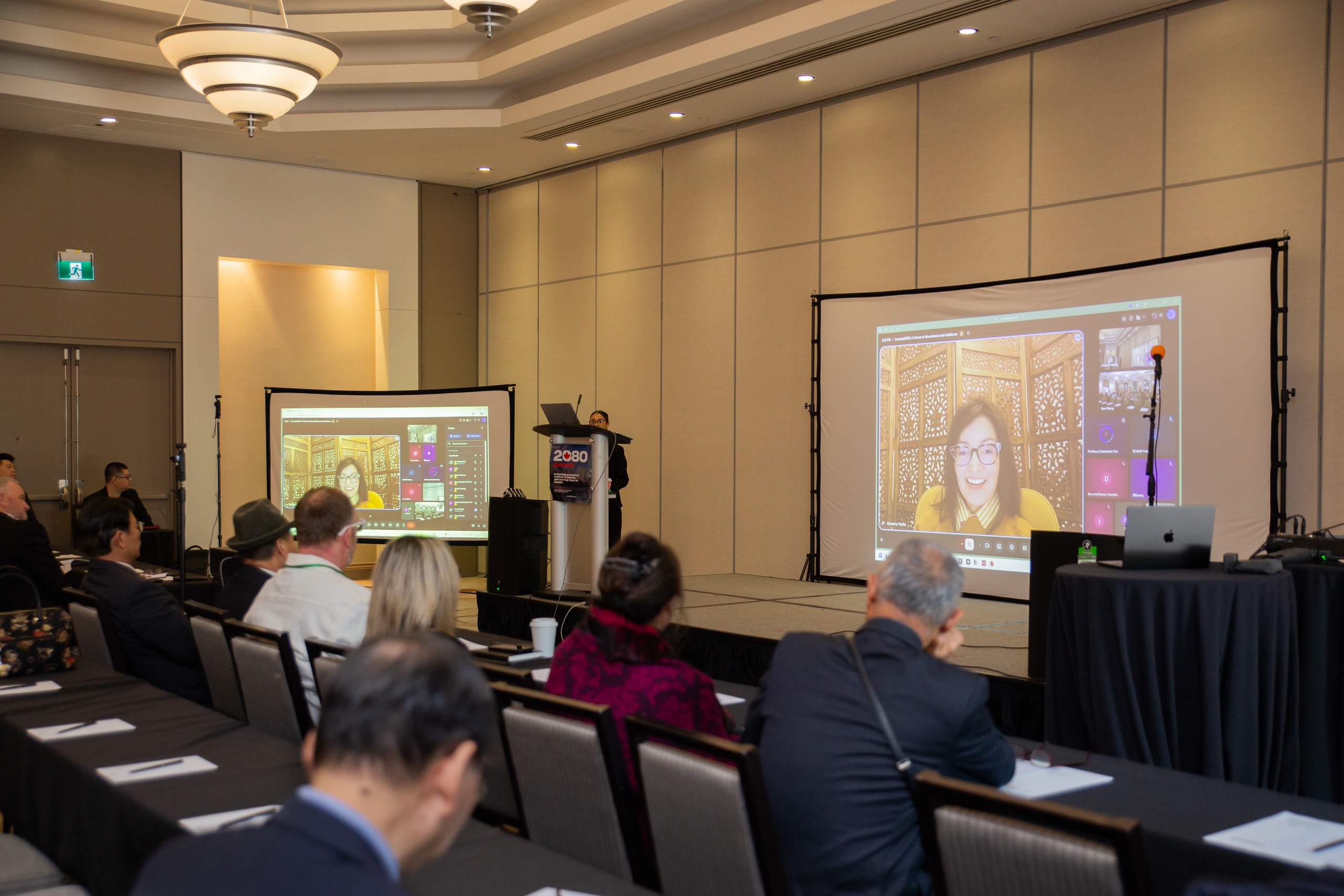
Joining remotely. She called for relationship building and trust building: begin with the partnership, not a product. -
Dr Erin Trochim
LinkedIn Full Transcript Panel
Also remote. She joined as a Canadian living in Alaska, and she had given this account there the week before. A vast amount of geospatial data exists. Very little of it reaches the person who needs it when something breaks.
Her story was a door stuck closed, after an earthquake, a house on permafrost, or a single frost heave. From the geospatial side, she said, we have known quite a bit for a long time. She told it as a homeowner as well as a researcher. NASA's NISAR products track the movement, including the ground around the house. The question is whether somebody tells the homeowner, and what happens next. Too often it goes straight to the insurer, and the information does not come back as an action.
The data is plentiful and, on the jurisdictional side, still not connected. New systems need common protocols across individuals, municipalities, tribal nations, and state and federal governments, with authority retained by the participants. Cognitive offloading hands thought to the model. She wants the other half kept: the ability to question a finding, and a choice about who the system does more for.
For Canada in 2080 she offered four tests of control, drawn from community planning she wants embedded in the information system.
- Contestability: the people affected can contest or refuse a consequential decision.
- Dependency: participants can operate, interpret, maintain, and negotiate without one vendor or one expert.
- Value intention: community assets are strengthened or extracted, and the difference has to be visible.
- Adaptability: institutions and communities can exit, provide, substitute, or repair.
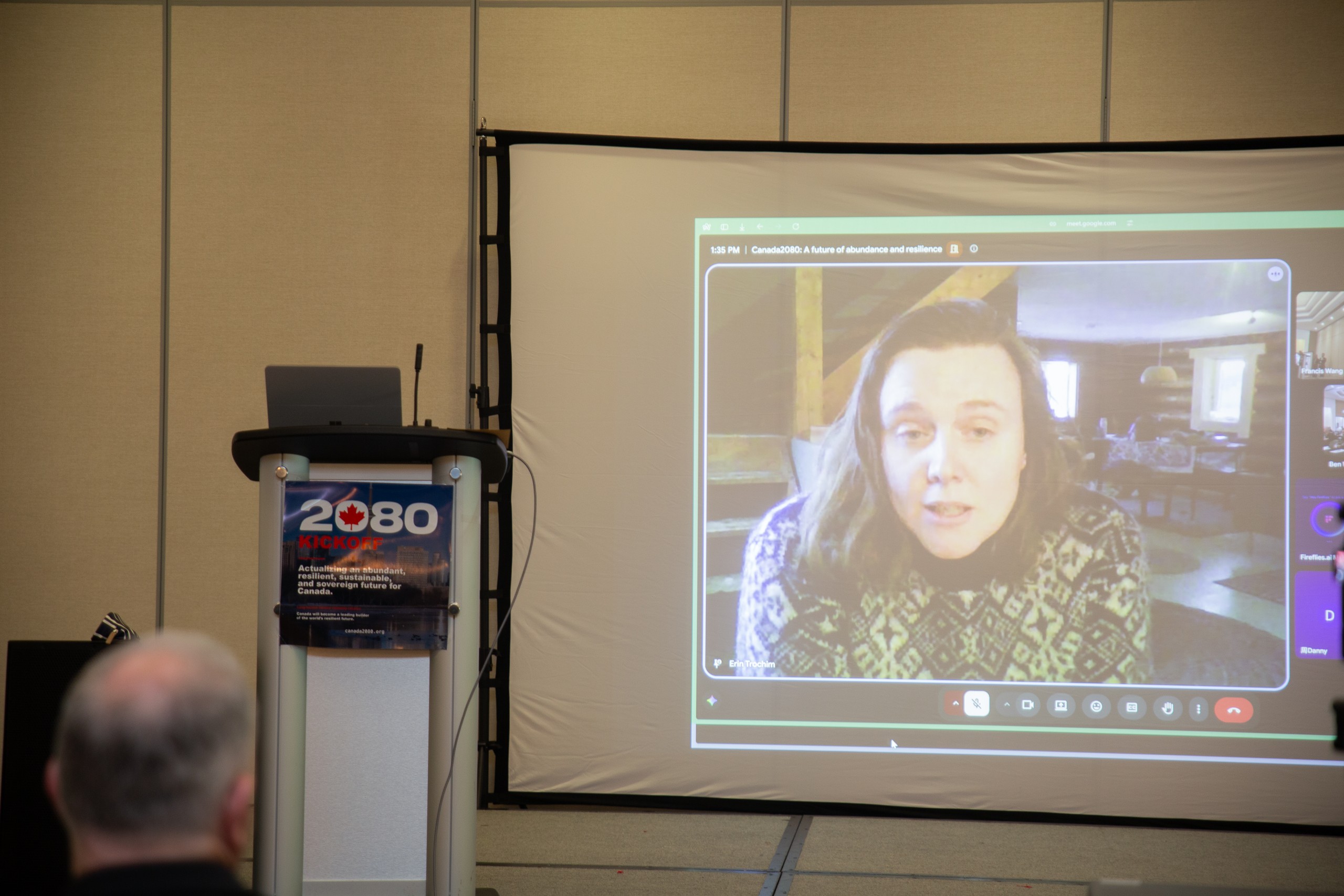
Joining from Alaska. The data has to reach the person when the door is stuck closed. -
Sunita Kumari
LinkedIn Full Transcript Panel
AI is writing code and taking on human tasks. The other side, she said, is risk: hallucinations, biased responses, and exposed customer data. That is where governance starts.
Governance enforces the controls that keep a model operating responsibly. Sovereign AI is who controls the environment: where the data resides, where the infrastructure is, who can see the data, and who answers for the outcome.
Her example was a bank's mortgage agent that keeps denying applicants with a strong credit history. If the training data carries a location preference, the responses will be biased too. Governance makes the output transparent. When something looks wrong, the system looks at the evidence and escalates to a person, and that person can ask for a retrain.
People think governance slows innovation. She said it is how you scale with confidence. She compared the early fear of putting a credit card online, which receded once anti-fraud controls existed.
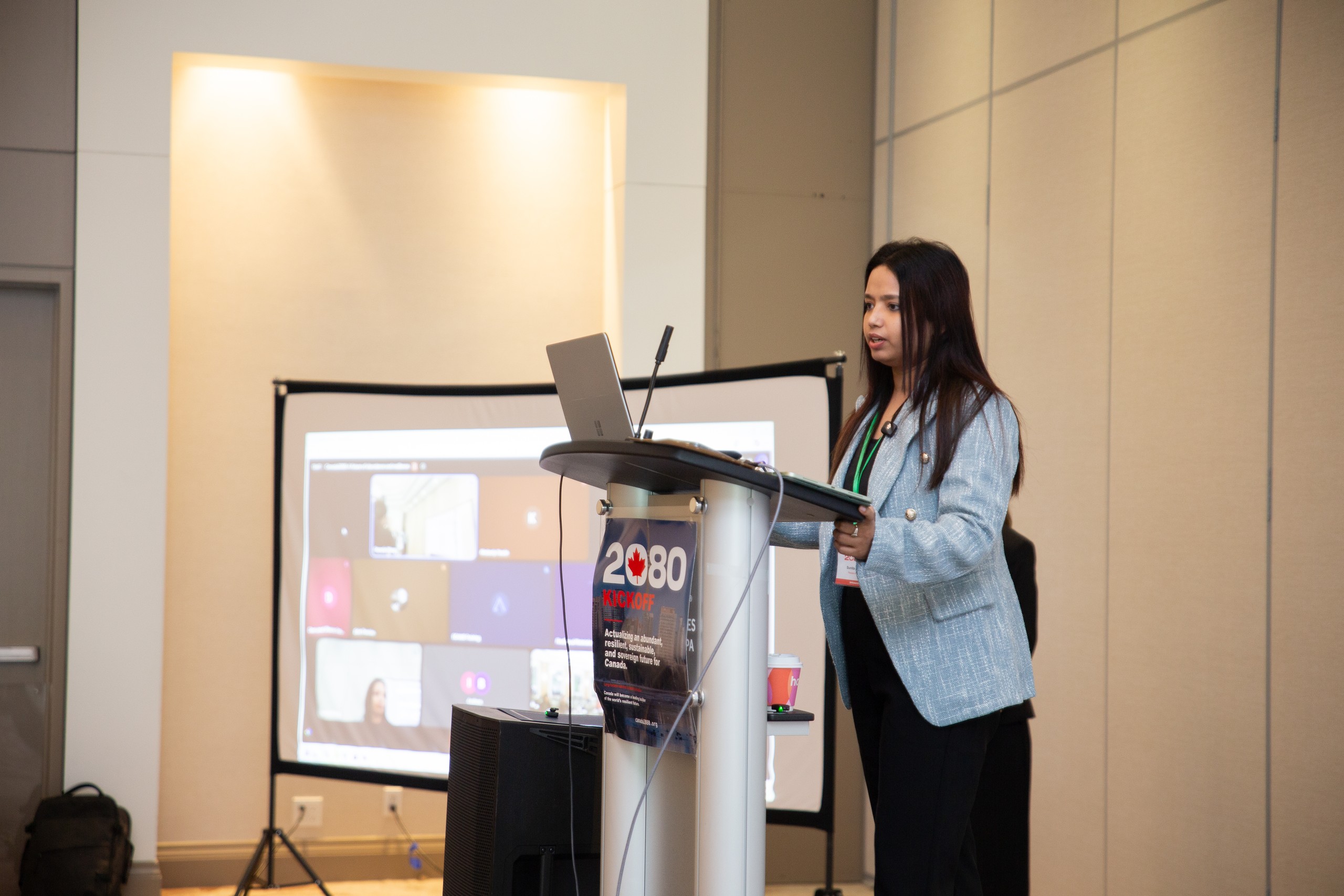
On where the data sits, and who answers for a model's outcome. -
Pyn Lim
Joining remotely. For almost two decades she has worked across aesthetic medicine, aesthetic surgery, and professional postgraduate education for doctors and surgeons. The safety risk she keeps seeing is what happens after treatment.
Patients often do not have a clear, traceable record of what was done to the body. She put post-care capture at 16 percent. Someone may know they had a facelift and still not know which kind. She means the verified record of care already delivered, not a provider's plan for a later treatment. The clinic may keep the file. If the patient changes providers, travels, or develops a complication, the next clinician may not know the product, the device, the implant, or the procedure.
The project asks whether every person can keep continuous access to a verified treatment history while privacy and clinical integrity stay protected. She called that one of the clearest practical cases for patient data sovereignty and governed private AI.
- Vaccinations for her two children, from birth to college, sometimes at school and sometimes with the GP. Different booklets, and sometimes none. Years later a parent may still have to prove the history.
- Aesthetic procedures: Botox, fillers, breast implants, a facelift. After medical tourism, a complication can appear only once the patient is home, and the original provider may be hard to reach or unwilling to share the record.
- The patient receives and keeps the verified record, decides who may see it, and carries it across providers and borders. The treating professional authenticates the entry. The patient cannot simply alter it. A correction is a signed, dated addition that keeps the original and its audit trail.
- What the record might hold: vaccinations, allergies, medications, supplements, blood tests, ECG reports, bone density, procedures, implants, devices, and autologous tissue or cell-based treatments.
- Governed AI can build a timeline, explain the clinical language, and prepare a summary for the next provider or for the patient. It can flag missing details, supplement duplications, interactions, cumulative intake, and selected relationships between genetics and medicines. These are prompts for review. It does not diagnose, prescribe, or tell someone to stop a treatment. Every output links back to the source, and a person reviews what is clinically important.
- Begin with a defined problem and a demonstration that produces evidence before it makes promises. A project will start in Europe, in Ireland. She welcomed connections to Canada and to similar work.
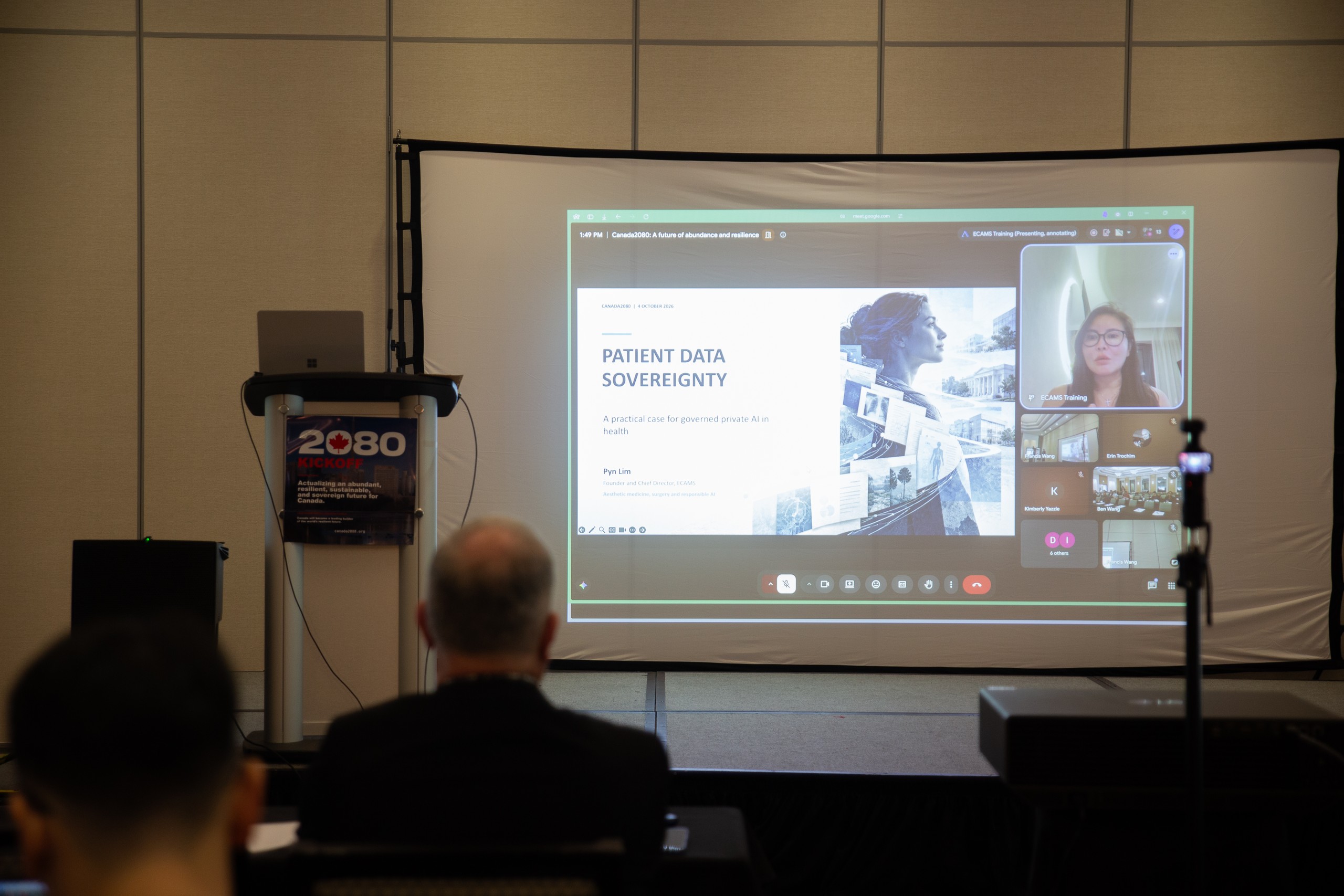
Beside her slide on patient data sovereignty. The record of care has to travel with the patient. -
1:40 p.m.
Borrow the practice.
Prove the deployment.Kritika Saihgpaul introduced the panel. Francis Wang asked the questions. Sunita Kumari, Dr Erin Trochim, and Dr Sudarshana Bhattacharya answered. Pyn Lim did not speak. Dr Kimberly Yazzie's link dropped before her question, so a planned question on consent was not taken.
What Canada can borrow
- Sunita Kumari: data stays in the country, server location is known, access is known, and a person is accountable for the outcome. Those answers are a baseline before a sovereign deployment.
- Dr Erin Trochim: a news story from Australia, she believed from the week before, on data-centre construction. Look at that country's laws and at the energy those centres use, look past how the industry developed there, and then look at how it would work in your own backyard.
- Dr Sudarshana Bhattacharya: the Asia-Pacific habit of avoiding huge parameter counts, and of starting with a small, domain-specific model trained at home on cleaner data.
What counts as safe
- Sunita Kumari: governance is not a one-time check. It has to run with every response.
- Dr Sudarshana Bhattacharya: provenance, so a mortgage denial can be explained, plus continuous watching for new threats. She called for security platforms that keep looking, because the threats change.
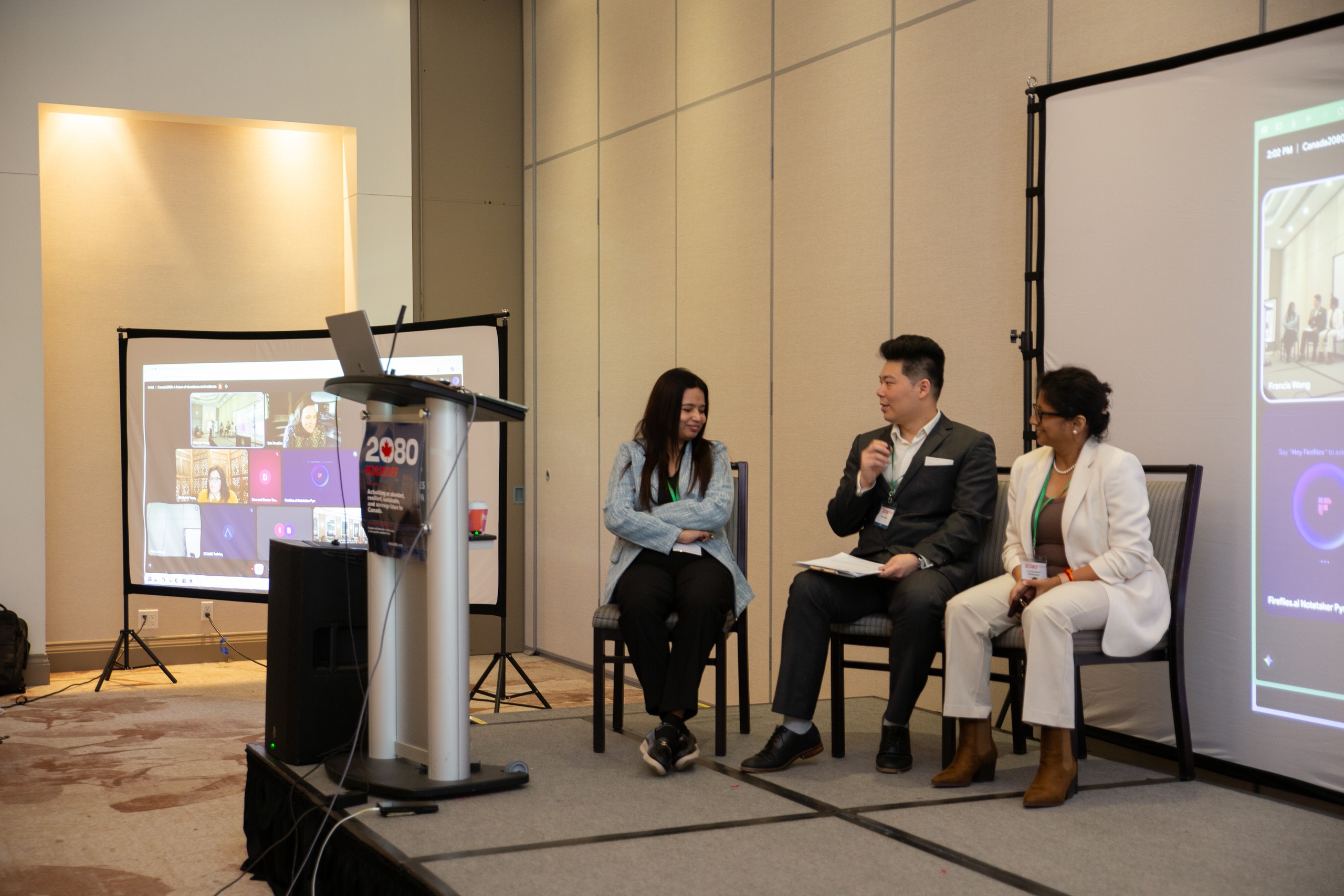
He asked what Canada can borrow, and what evidence makes a deployment safe. Sunita Kumari and Dr Sudarshana Bhattacharya are seated with him. -
1:55 p.m.
Infrastructure,
for the longer term.Kritika Saihgpaul introduced the second set. The company histories and funding decisions below are what each speaker said.
-
Barry Wylant
LinkedIn Full Transcript Panel
He spoke as an industrial designer, from Alberta. The firms he worked with reached the next scale by selling, not by scaling themselves.
- Chariot Carriers made child bicycle trailers and built an international presence. He worked on the Wing, plastic wheels, and hitches. Thule bought the company.
- Tenet Medical Engineering develops products for orthopaedic surgery. Smith & Nephew bought it.
- Dynastream Innovations made personal activity monitors just outside Calgary. Garmin bought it.
In the early 1960s, Canadian plants made standard transmissions and the United States was moving to automatics. Canada put a 25 percent tariff on cars with automatic transmissions. That fight led to the Auto Pact, then NAFTA, then its most recent form. Expo 67 is when Canadian design came of age. The Maple Leaf flag was two years old, and the design body later headquartered in Montreal is now the World Design Organization. By the 1990s, China had become the world's manufacturer.
Canada, he said, is a medium-sized nation with a small population. Innovation here is often bought by a firm that can take it further. His questions for 2080 are what scaling AI looks like, how it can be used, and whether there is a Canadian way to support it.
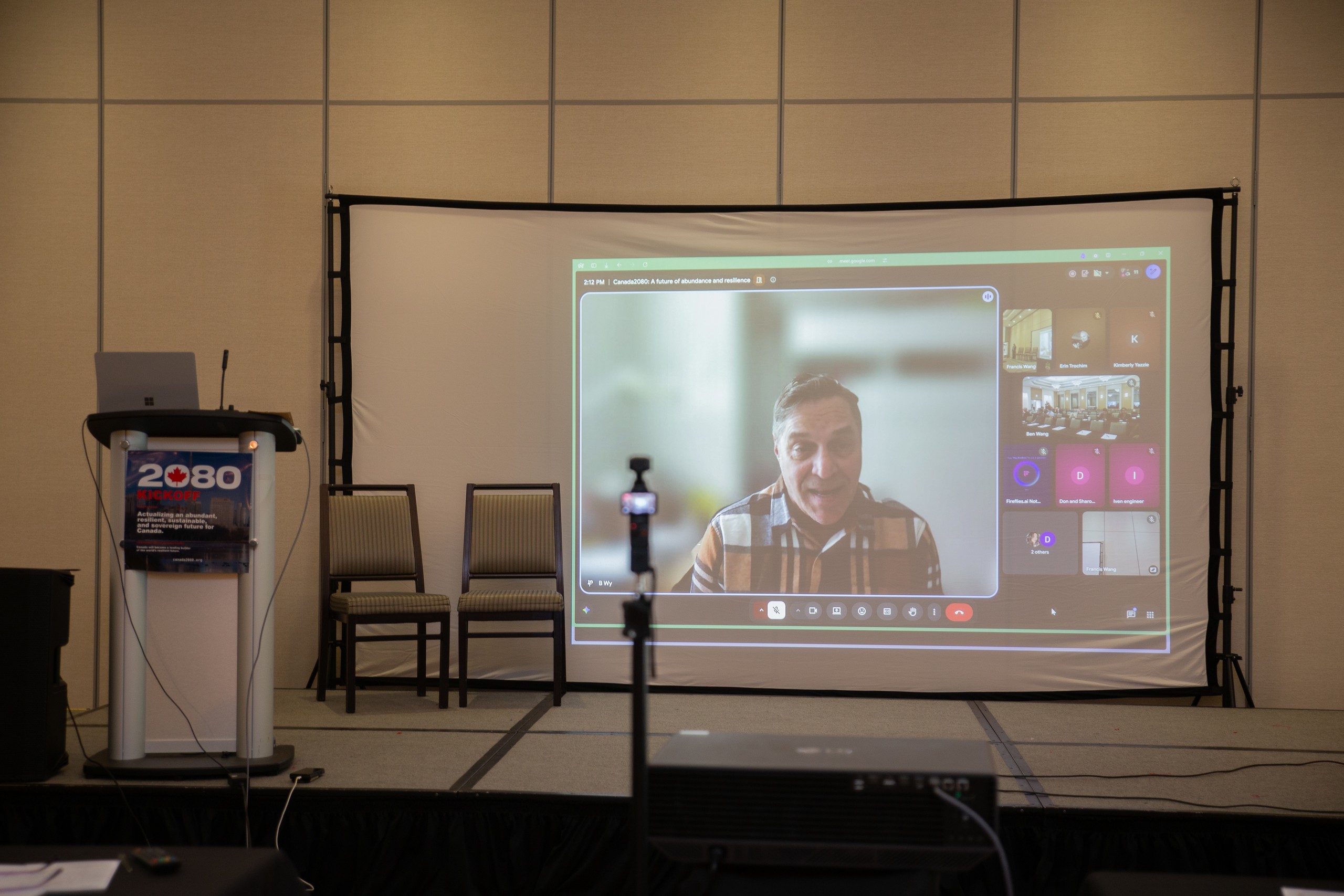
Joining from Alberta. The firms he worked with reached the next scale by selling. -
Yulia Korobkova
LinkedIn Full Transcript Panel
She does not think the build waits until 2080. With the technology she sees, from computing for the AI infrastructure through to construction, it is 2040 or 2050. After more than 15 years building industrial projects, she said Canada already has the land, the talent, the technology, and the manufacturing resources, and has what it takes to lead.
A data centre, in her comparison, has less environmental effect than light industry such as a Coca-Cola bottling plant or an Amazon distribution centre. Noise is lower than the distribution centre. Closed-loop systems use about as much water as an office. Contamination is almost nothing.
She sees development moving from Class A buildings alone toward high-tech industrial campuses the community is part of, with jobs, buffer zones, and less impact. A data centre is no different from any other industrial facility. It has to be done right.
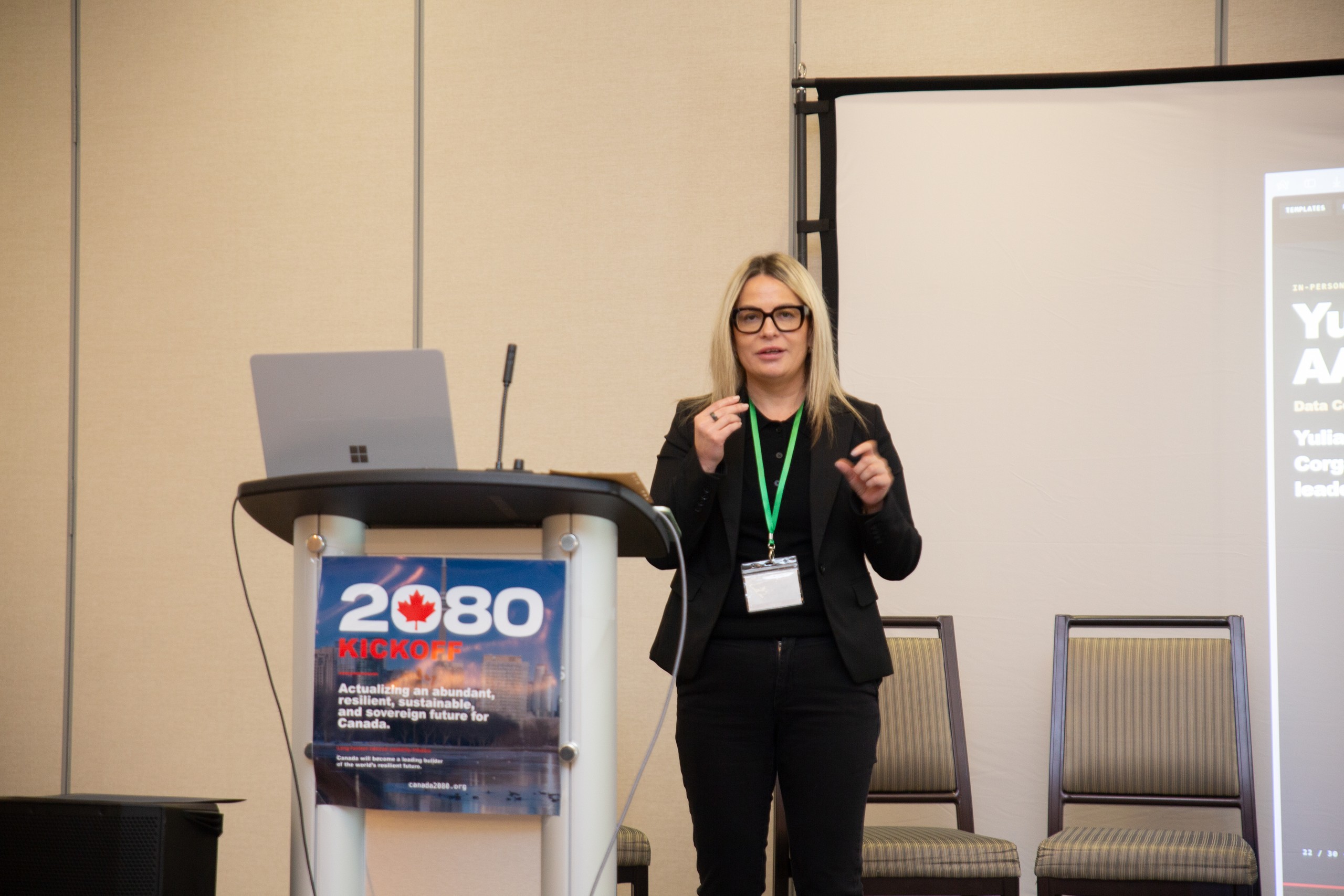
Canada, she said, already has what the build takes. The horizon she sees is 2040 or 2050. -
Greg Hart
LinkedIn Full Transcript Panel
2080 is not a problem to be solved. Easy problems should be solved. If someone calls this one wicked, his reply is that it is not really a problem.
His picture was a boat of old assumptions. The future is a process, and it never arrives. The same thinking produces the same results. He cited Sidney Dekker on the drift into failure, and said Canada is in danger of waking up to find that the drift has already happened, let alone of achieving something remarkable by 2080. The task includes avoiding something remarkable and negative. He cited Warren Buffett, riffing on Socrates and Buckminster Fuller: if the boat is leaking, keep patching it, and still spend time looking for a new one. There are no broken systems. A system produces the patterns it produces, including the ones you do not like. Strategy asks what could be created.
Design, as he defined it, is the conditions for success. Speed is a byproduct of low friction, not a goal. Apollo, for him, was a mission built on potential. A living system creates the conditions for more life, prefers quality and lower energy, and has to be competent.
Places matter. Utrecht drove an expressway into town in 1980 and later retrofitted it. Ignore the place, he said, and the result is a Blade Runner future. Education has to be rewired around critical thinking, systems thinking, and computational thinking.
Relentless pragmatism: know where you want to go, know where you are without romance, and know what it takes to get there. Start Monday.
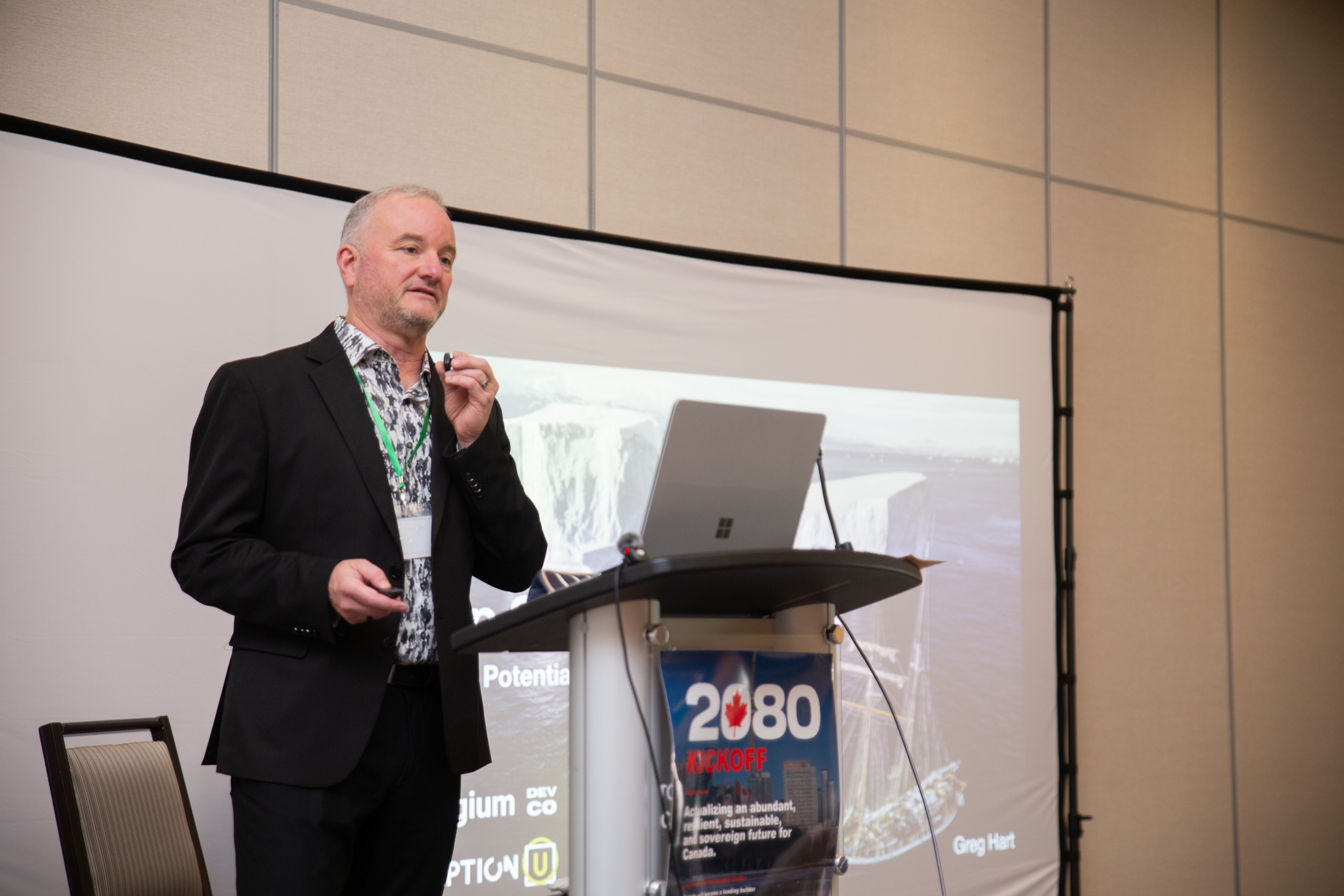
The drift into failure may already have happened. Know where you are going, know where you are without romance, and start Monday. -
Dr Michael Donaldson
Design Workshop Full Transcript Panel
He agreed with Greg Hart. Ten years of private practice, as an architect, showed him systems that deliver almost none of what they promise. His question is why we keep doing what does not work. He has a lot of questions, and he does not have the answer.
The largest holders of commercial property, and large investors in Canadian infrastructure, still show a strong aversion to risk and a short horizon. An asset that matures over 10 or 20 years, he said, is treated with the same thinking as a return expected in six months. Ask the people delivering the project where their agency is, and there is usually no answer.
He called the alternative an innovation mindset: an unwillingness to accept what is not optimal. Both of his parents volunteered at Expo 67. He wants that kept as a founding story of what is positive, and of coming together when it is difficult.
His test is four days in the depth of winter, the power out, and no food coming in. Would you know what to do, how to talk to people, and how to hold a problem-solving conversation? Some individuals would. Not everybody. He asked how Canada can learn from countries already facing obvious security threats: decentralize, and make resilience a baseline expectation woven into what we do. He will not let the question go.
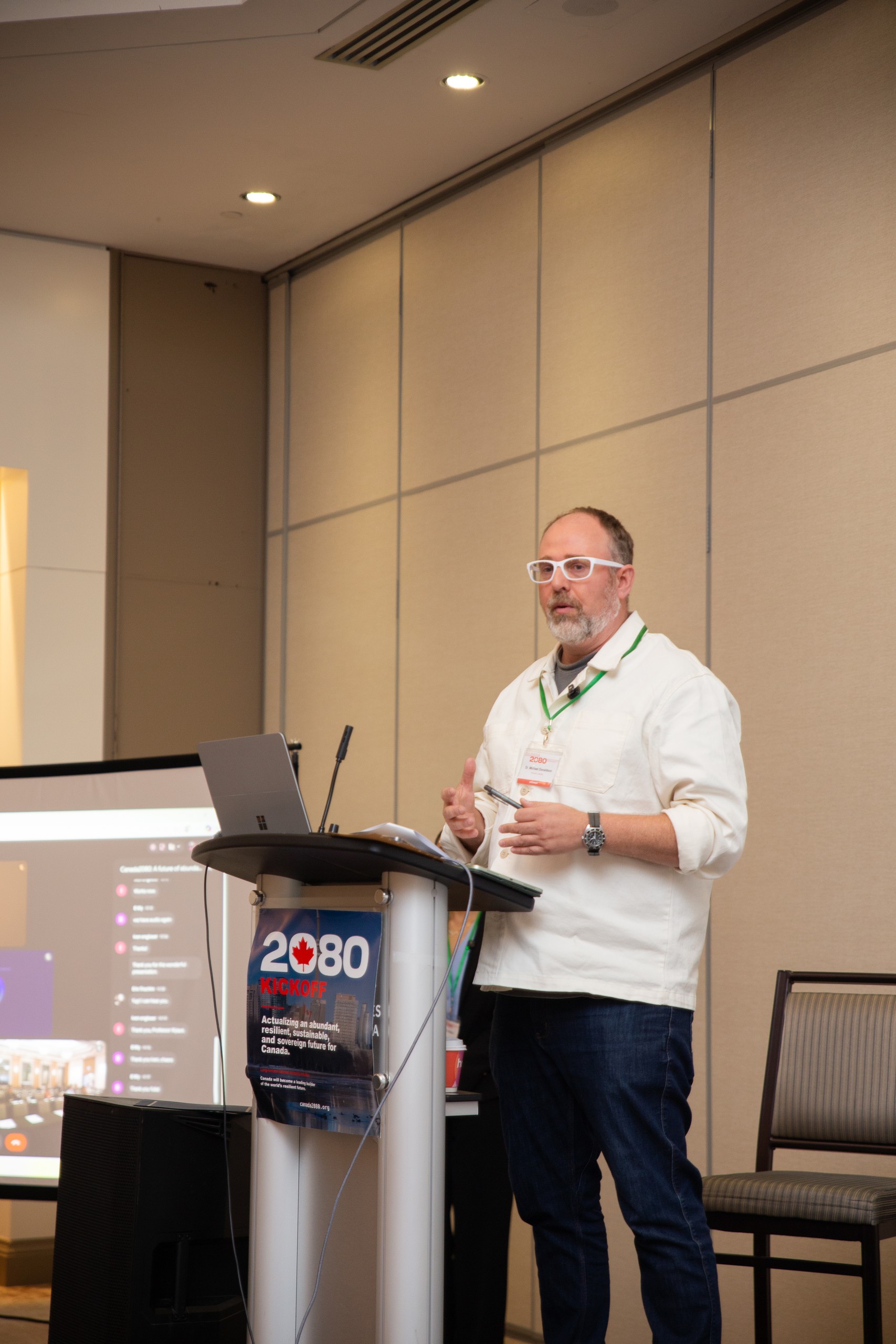
On systems that do not deliver, and on four days in winter with the power out. -
Sebastien Gendron
TransPod Full Transcript Panel
He is co-founder and CEO of TransPod. The proposal is a steel tube on concrete pillars between Edmonton and Calgary, most of the air removed, so a vehicle can go faster than 300 kilometres an hour. He put the chance to define that system before 2028.
Alberta has worked with the company since 2020. The province had still wanted three years before a request for proposals. Premier Danielle Smith, the Monday before the kickoff, switched that Edmonton-Calgary competition from an expression of interest to a request for proposals before the end of the year, with a preferred bidder in April 2027. Within six months, TransPod could be that bidder. He remains skeptical. A country he hears described every day as first to be second would have to wake up and decide it wants to lead twenty-first-century transportation. He asked whether that would be because of the Trump administration, because Canada is struggling financially, or because it wants a new industry.
- The Strategic Innovation Fund, under the Trudeau government, refused TransPod twice. Once, because it did not understand the intellectual property. Once, in a letter that gave no reason.
- Invest Ontario said it would invest after a $400 million round. His line: they would invest when the company no longer needed the money.
Export Development Canada described Canada as a bear coming out of hibernation. He will see next spring, when the selection is made, whether the bear stays awake or goes back to sleep. Smith's request is a good signal that the province will not wait another three years. He still does not know whether it is a decision for tomorrow's technology, or a return to a conventional train, unprofitable, and on the path of similar projects that failed.
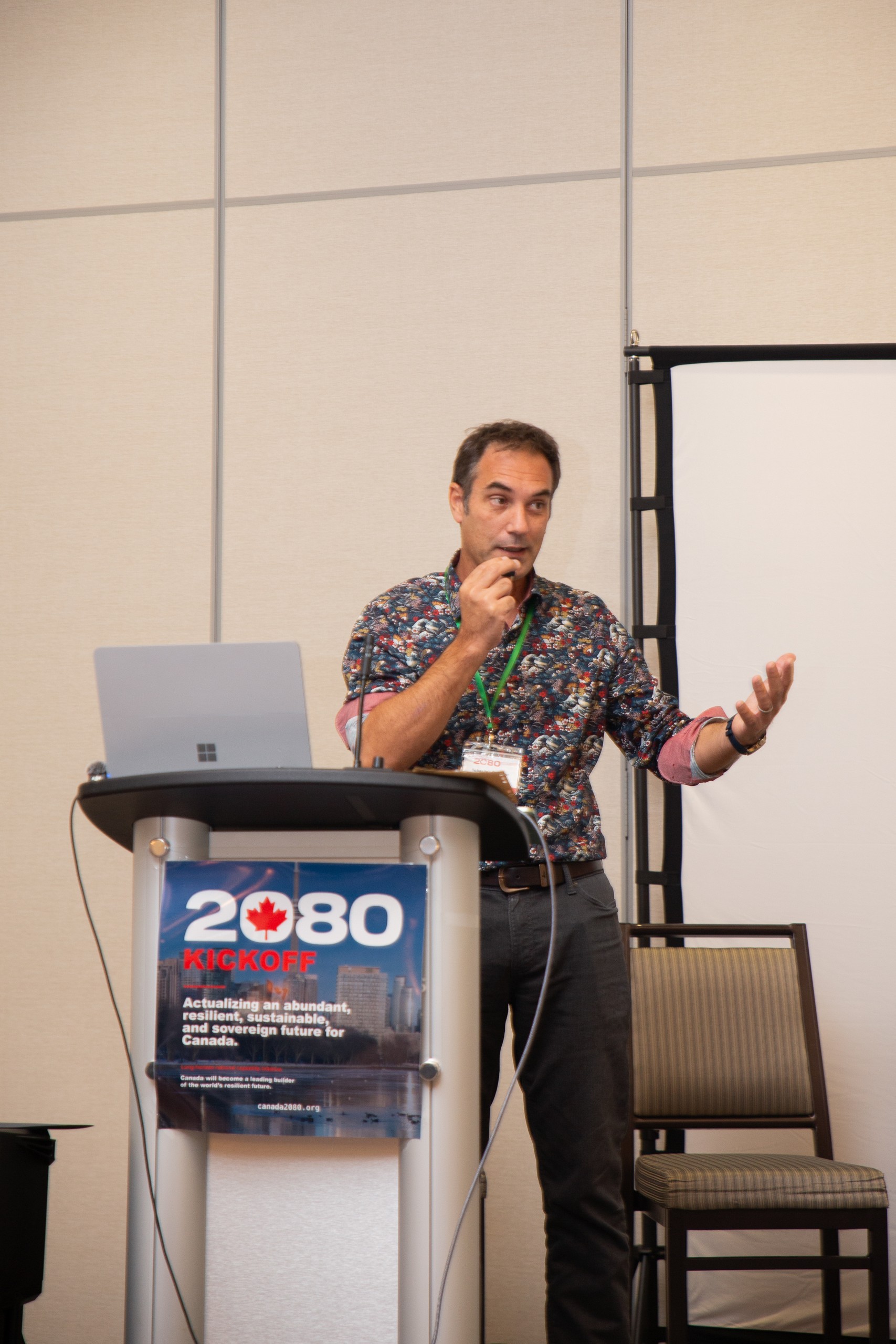
Canada, he hears, is known for being first to be second. 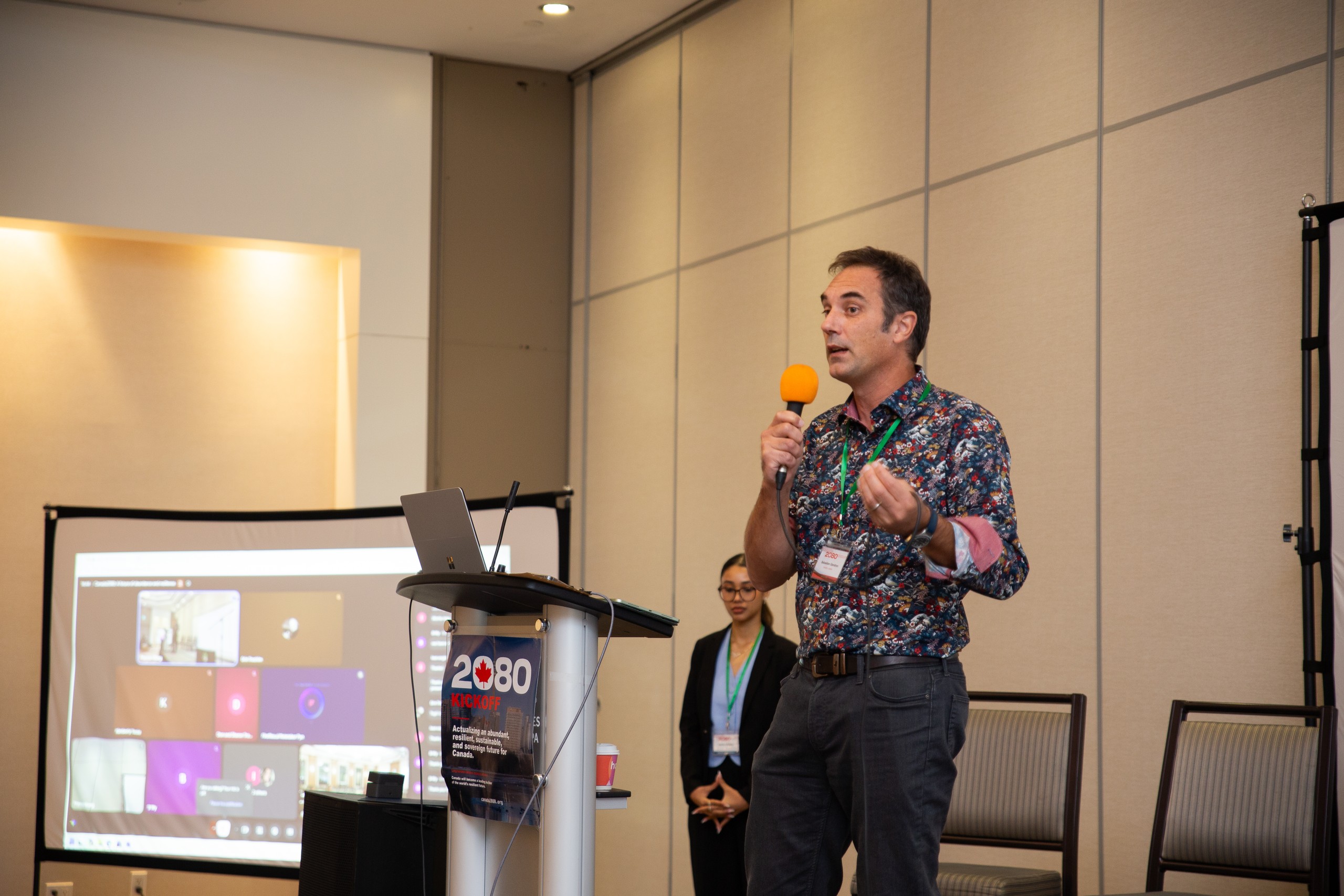
On the Edmonton-Calgary line, and on whether the bear stays awake. -
2:15 p.m.
How Canada would know.
Francis Wang asked two questions. How would Canada know, within ten years or sooner, that it was making progress rather than collecting isolated projects? And what does Monday look like? Someone offered GDP. He said that is not the answer.
Signals of progress
- Greg Hart: measurement only works once Canada knows what it is playing for. The habit, he said, has been catch-up. Then the work has to be visible enough that people can see whether it is happening.
- Yulia Korobkova: harmonize labour and requirements, and let construction development charges come down a little, so developers can build faster and more cohesively.
- Dr Michael Donaldson: structure GIS data so it can actually be used, as he heard argued at a UK architecture conference, and regulate professions nationally so administrative layers that create no value come out.
- Sebastien Gendron: the will to do it. He has heard administrations, in Canada and in Europe, call it too risky to try to be first like China or the United States. His alternative is learning by doing, and asking how to make it work.
- Barry Wylant: Canada has grown comfortable selling resources, and is not the manufacturing or innovation leader that Korea, Singapore, or Scandinavia are. Step out of the small-player mentality, and recover the ambition of the 1960s.
- Greg Hart placed the sleep in the 1980s free-trade agreement. Sales to one country moved from 40 or 50 percent to well over 80 percent. He hoped the bear comes out of the den hungry.
What Monday looks like
- Sebastien Gendron: keep pushing, with selection next April in view. Draft the application so the bureaucrats are not scared, and so the value proposition is good enough to sign into the future.
- Dr Michael Donaldson: keep the conversations, say when something is not working, choose the vector, and go and do it.
- Yulia Korobkova: get comfortable being uncomfortable. Resilience is a new measuring point, and the constraints are where the next way of working shows up.
- Greg Hart: start Monday means build the compass, then do the small things so the needle tracks, including the conditions Sebastien's Alberta request would need. He offered to check on the bear.
- Barry Wylant argued for Tuesday. Monday, he said, is heart-attack Monday. The practical version was act locally and think globally: every small move is part of the larger mission.
Francis closed the round by asking for more gatherings like this one, hosted in Canada, and for trade that brings materials in and manufactures here. Starting tomorrow, he said, plan something larger for next spring or fall, make the phone calls, and celebrate if Sebastien wins the Alberta request.
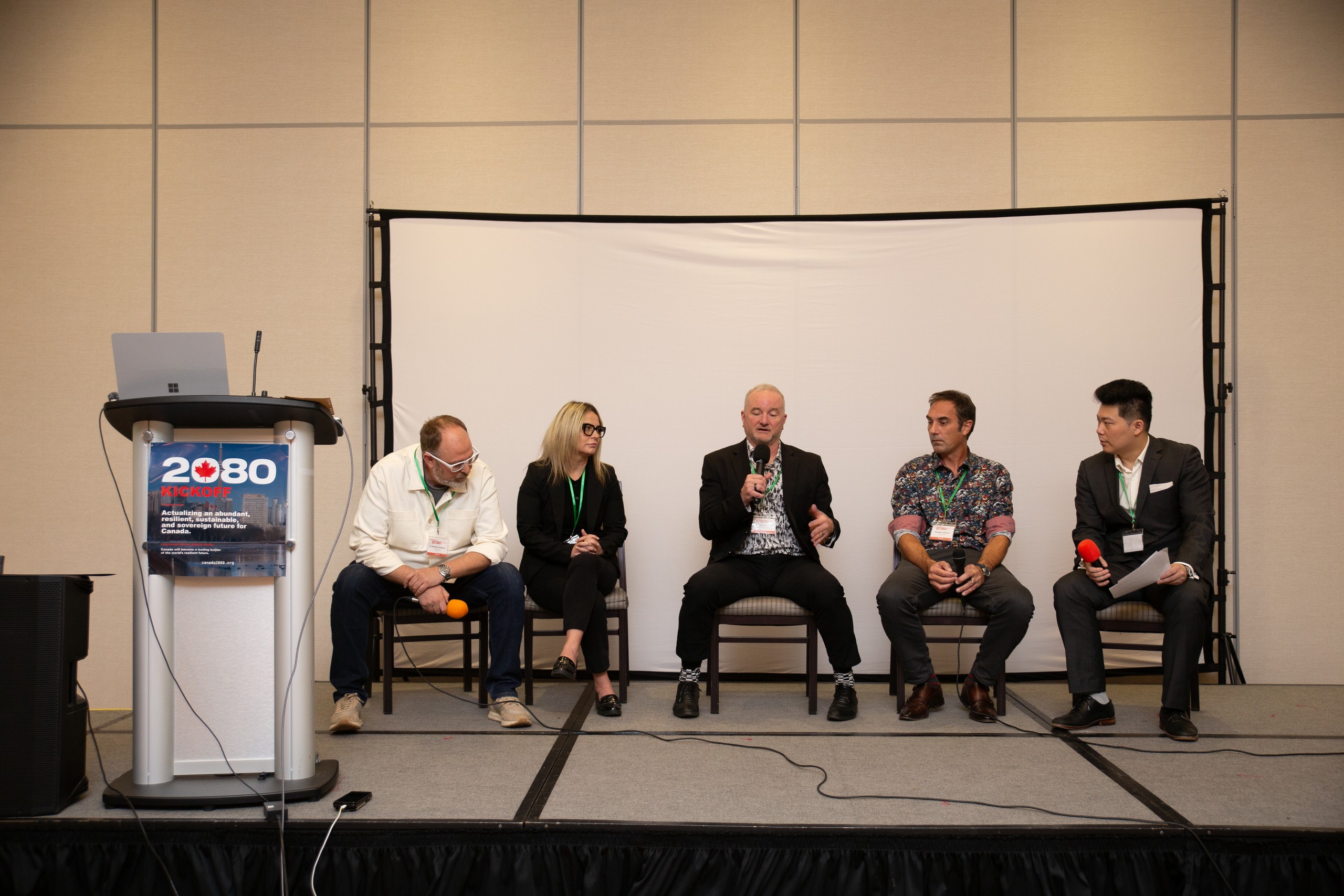
The second panel, discussing how Canada would know we are making progress. -
2:30 p.m.
Go far, and go together.
Francis Wang
He closed in English and in Chinese.
The afternoon was in Markham. One of his aunts, he said, finds these events difficult because they are held in English. His parents were in the room. He asked guests to carry the ideas into their own communities.
Francis closed the session with two sayings that capture the essence of the day.
- A plaque at Waterloo's Conrad School of Business says, if you want to go fast, go alone. If you want to go far, go together. An initiative of this scale, he said, takes coalitions, partnerships, and a common belief. The value realized has to come back to the people who struggled toward it.
- Better run than curse the road, and in Chinese, 与其感慨路难行,不如即刻出发. It is a long road. It takes grit and luck. Fortune, he said, favours the bold, and providence favours those who persist after failure, through adversity, and when they are tired. The difficulty was known before the start.
- We, the North, are a strong people. We know tough winters, how to keep stock, and how to provide for one another when the table turns. Winter will pass, and we will welcome spring. He invited the room to build a sustainable, abundant, and resilient Canada.
Participation in the afternoon was not an endorsement of Canada2080. Figures and institutional histories above are what the speakers said.
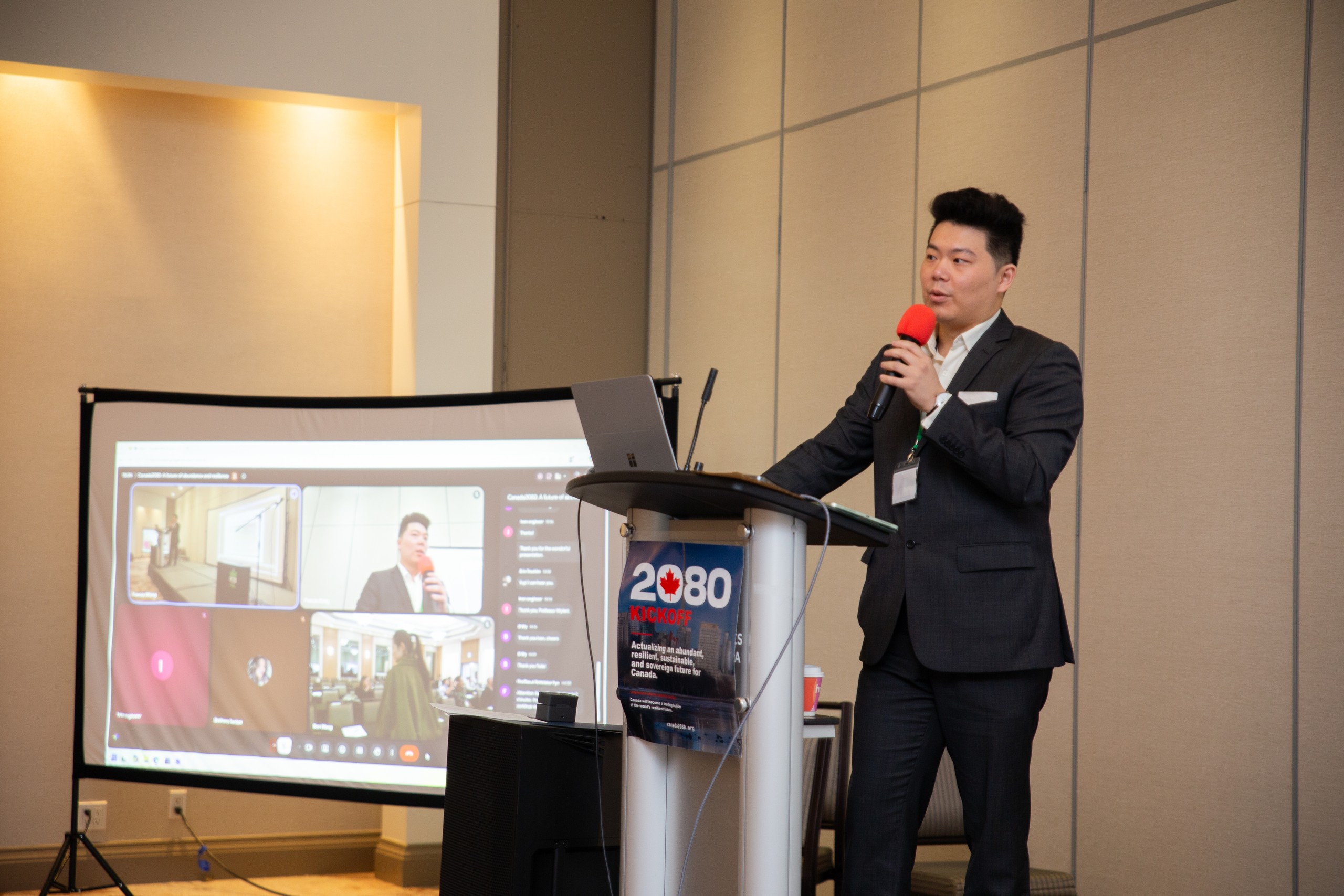
If you want to go fast, go alone. If you want to go far, go together. Better run than curse the road.
Tripartite Ecosystem Model
Innovation advances where education, industry, and governance meet.
Each sphere contributes a different form of capacity. The shared field is where research encounters real demand, public purpose, operating knowledge, talent, and the conditions required to build.