
Kickoff recap · Sovereign AI · 1:20 p.m.
Patients often leave without a clear, traceable record of what was done to the body. She put post-care capture at 16 percent.
For almost two decades she has worked across aesthetic medicine, aesthetic surgery, and professional postgraduate education for doctors and surgeons. The clinic may keep the file. If the patient changes providers, travels, or develops a complication, the next clinician may not know the product, the device, the implant, or the procedure. A patient may know they had a facelift, and still not know which kind. She means the verified record of care already delivered, not a provider's plan for a future treatment.
The project she is working on asks whether every person can have continuous access to a verified treatment history while privacy and clinical integrity stay protected. She called that one of the clearest practical cases for patient data sovereignty and governed private AI.
Two examples from her own experience.
- Vaccinations for her two children, from birth to college, sometimes at school and sometimes with the GP. Providers handed over different booklets, and some handed over none. Years later a parent may not know where every booklet is, and may still have to prove the history for college or travel.
- Aesthetic medicine and surgery: Botox, fillers, breast implants, a facelift. Patients may be unable to name the product or the technique. After medical tourism, a complication can show up only once they are home. The doctors taking over may have no reliable record, and the original provider may be hard to reach or unwilling to share it.
Sovereignty, as she set it out, protects both patient control and clinical integrity. The patient receives and keeps a verified record of significant care, can understand it, decides who may see it, and carries it across providers and borders. The treating professional authenticates the entry. The patient cannot simply alter it. A correction is a signed and dated addition that keeps the original and its audit trail.
The record might hold vaccinations, allergies, medications, supplements, the latest blood tests, ECG reports, and bone density measurements, plus procedures, implants, devices, and autologous tissue or cell-based treatments.
Governed AI can organize that verified information into a timeline, explain the clinical language, and prepare a short summary for the next provider or for the patient. It can surface what needs a professional to look: missing treatment details, possible supplement duplications, potential interactions, excessive cumulative intake, results that matter to a planned treatment, and selected, clinically validated relationships between genetics and medicines. These are prompts for review. The AI should never independently diagnose, prescribe, or tell someone to stop a treatment. Every output links back to the source. Clinically important findings require a person. Private AI can make the sensitive record useful while access stays under the patient's control.
She would begin with a clearly defined problem and a practical demonstration, one that can produce credible evidence without promises made before they have been tested. A project will begin in Europe, starting in Ireland. She wants a wider movement around patient data sovereignty and responsibly governed AI in healthcare, and she welcomed connections to Canada and to similar projects.
Full Transcript
Cleaned up transcripts.
Hi, good afternoon, everyone. Is it possible if I can share my screen? Have you guys seen the screen?
Someone in the room said yes.
Perfect. Don't want you to be staring at my face.
Okay, so good afternoon, everyone. My name is Pyn and I'm just going to go through the presentation as quickly as possible and go straight into it. I have five slides. I promise I won't take too much time and I don't want to bore all of you.
For almost two decades, I have worked across aesthetic medicine, aesthetic surgery, and professional postgraduate education for doctors and surgeons. Through this work, I keep seeing a specific patient safety risk after treatment. For example, patients often do not have a clear, traceable record of what was actually done to their body. They might have some idea, but data shows that most post-care patients capture only 16 percent of it.
The clinic may retain the information, but if the patient changes providers, travels, or develops complications, the next clinician may not know what product, device, implant, or procedure was actually used on them. A patient might vaguely know, okay, I had a facelift, for example, but they're not really clear what kind of facelift they had. So, I'm referring to the verified, factual record of care already delivered, rather than a provider's proposed treatment plan for a future clinical strategy.
Now, I'm working on a project focused on this step: can every person have continuous access to a verified treatment history while privacy and clinical integrity remain protected? This is one of the major questions that we have to ask ourselves, and I believe this is one of the clearest practical cases for patient data sovereignty and governed private AI.
Let me give you two examples from my own experience. One is not related to aesthetics, and the other is just vaccinations for my two children. My two children received vaccinations throughout their lives, from birth until they were 18 years old and able to go to college. The vaccinations were provided sometimes by the school, and sometimes directly with the GP. During these vaccinations, every provider gave us a booklet. Some didn't even give us a booklet. So as a parent, you are receiving different booklets, but there was no single consolidated record. Years later, a parent may not remember where every booklet is, which provider administered each vaccine, or how to retrieve a complete history. And yet, when my kids are going to college or traveling, I may have to prove the types of vaccinations they have received, or any other kind of medical care they might have had.
Another example is in aesthetic medicine and aesthetic surgery procedures. Say, for example, if you go for Botox, fillers, breast implants, or facelift procedures, fragmentation can become a critical safety problem. Patients may be unable to identify the fillers, implants, or devices used on them. They may not know the exact product or precisely what techniques were performed. This becomes especially serious after medical tourism. A complication may develop only after patients return home, and the doctors taking over the care may have no reliable record, while the original provider may be hard to contact or unwilling to share that piece of information.
Patient data sovereignty must protect both patient control and clinical integrity. The patient should receive and retain a verified record of significant care actually delivered to their body. They should be able to understand it, decide who may access it, and carry it across providers and borders.
The treating professional remains responsible for authenticating the clinical entry, and the patient cannot simply alter it. When an error requires corrections, a signed and dated addition should preserve the original entry and its audit trail.
The record might include vaccinations, allergies, medications, supplements, latest blood test results, ECG reports, and bone density measurements. All of this information a patient should be able to access easily. It could also cover procedures they have received, any kind of implants newly put in their bodies, any devices used, or any autologous tissue or cell-based treatments they have recently received.
A portable record becomes more useful when people can understand it. Governed AI can organize verified information into a timeline, explain clinical language, and prepare a concise summary for the next provider or for the patient. It could surface matters requiring professional review, such as missing treatment details, possible supplement duplications, potential interactions, excessive cumulative intake, or results relevant to planned treatments. It could also survey selected, clinically validated relationships between your genetics and medicines.
These are prompts for review. The AI should never independently diagnose, prescribe, or tell someone to stop such treatments. Every output should link back to the source, and clinically important findings require human review. Private AI can make sensitive information useful while keeping access under the patient's control.
So, where do we begin? We begin with a clearly defined problem and a practical demonstration, one that can produce credible evidence without making promises before they have been tested. A verified, portable health record provides a practical space to start: can a patient carry a verified record of care they have received between providers while controlling access and preserving the integrity of the clinical record?
I'm working on a project that will begin in Europe, starting in Ireland. I also intend to help build a wider movement around patient data sovereignty and responsibly governed AI in healthcare. If this project and its wider vision are of any interest to you, I would be pleased to continue the conversation, and I would particularly welcome connections to Canada and similar projects. Thank you.
At the kickoff
-
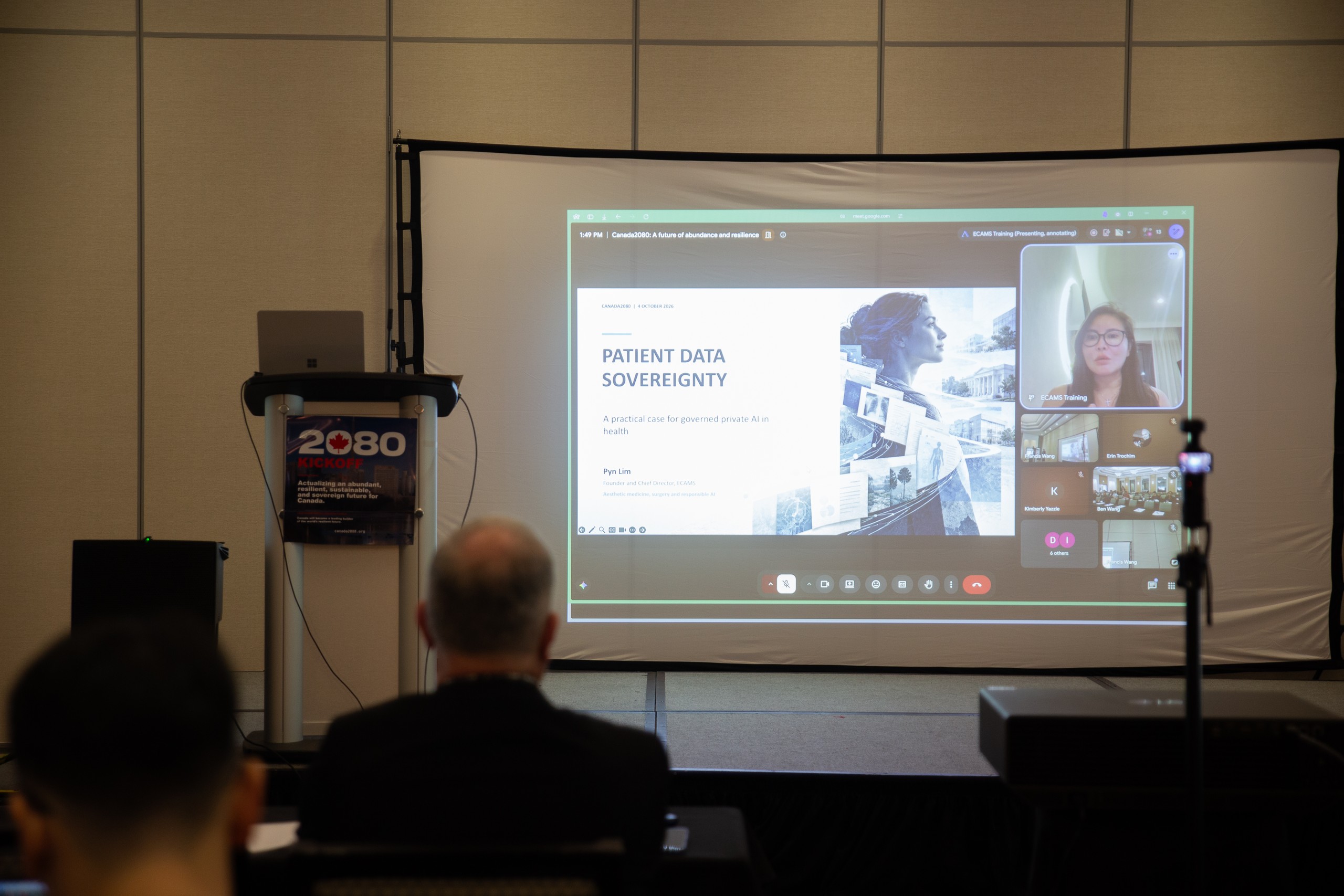 On the screen. Patient data sovereignty.