
Kickoff recap · Capacity · 1:55 p.m.
Canada, he said, is known for being first to be second. He does not yet believe it will choose to lead.
He is co-founder and CEO of TransPod, a ten-year-old deep-tech company working on high-speed transportation. People know the idea as Hyperloop. In South Korea it is called Hyper Tube. The same work is underway in South Korea, China, and Canada.
A train cannot go faster than 300 kilometres an hour, because of aerodynamic friction. The old answer, he said, is to run the vehicle in a tube with most of the air removed, so it can keep accelerating. On the ground that is a steel tube on concrete pillars. The vehicle looks like an aircraft without wings, held by a magnetic system, at about the speed of an airplane. He called it something we already know how to do. His horizon for defining the transportation system of this century is before 2028, the way the railway defined an earlier Canada.
TransPod has worked with the Alberta government since 2020. The province's Passenger Rail Master Plan is about connecting Edmonton and Calgary. The plan had been to take three years before a request for proposals. Premier Danielle Smith, the Monday before the kickoff, moved that request forward, from an expression of interest to a proposal before the end of the year, with a preferred bidder in April 2027. Within six months, TransPod could be chosen to connect the two cities.
He is skeptical. A country he hears described every day as first to be second would have to wake up and decide it wants to lead twenty-first-century transportation. He asked whether that would be because of the Trump administration, because Canada is struggling financially, or because it wants a new industry. He tied it to Greg Hart's point: old thinking drives old habits, and then failure.
Two refusals, and one that arrives only after the money is no longer needed.
- Under the Trudeau government, TransPod applied twice to the Strategic Innovation Fund and was denied twice. The first answer: the fit was good, but the fund did not understand the intellectual property, so it would not invest. The second was a letter that said thank you, but no, and gave no reason.
- Invest Ontario told him the company checked the boxes, and then that it would not invest until TransPod closed a $400 million round. His question back: you will invest when we no longer need the money? The answer he heard was yes.
He said that is the feedback across the board, and that this is the culture that has to change if Canada wants to lead by 2028 and stand on the world stage.
Export Development Canada told him things are changing, and offered the picture he liked: Canada is a bear coming out of hibernation. The test, next spring, is whether the bear stays awake. He takes Premier Smith's earlier request for proposals as a good signal. He does not yet know if it is a decision to choose tomorrow's technology, or a return to a conventional train that does not pay for itself.
Full Transcript
Cleaned up transcripts.
Keynote
Thank you very much. Good afternoon, everyone. Thank you, Francis, for the invitation. I'm glad to be here and to be able to share with you, I would say, a practical case on how 2028, and hopefully sooner, Canada can look like.
So, as stated here, I'm the CEO and co-founder of TransPod. TransPod is a startup company, a deep-tech company developing the future of high-speed transportation. You may have heard about Hyperloop. In South Korea, they call it Hyper Tube. I'll share a few words on the technology, where we are, and where we're going moving next.
So, if you want to go faster than 300 kilometres an hour, today's train you can't do it because of aerodynamic friction. Like 100 years ago, it's not a new concept, people started to think about, what if those vehicles travel into a tube where you've removed most of the air? And so you can continue to accelerate. So, literally, you're talking about, on the infrastructure side, a steel tube on concrete pillars. It's not rocket science. The vehicle itself looks like an aircraft without wings, using a magnetic system to achieve speeds. Today, we're talking about the same speed as an airplane. So this is something we know, but we're not kind of used to that.
These technologies today are being developed in South Korea, China, and in Canada. So we have the opportunity, actually before 2028, to define the transportation system of the 21st century, the same way the railroad sector, I would say, developed the railways in Canada 100 years ago, if not more.
The company is 10 years old.
So, yeah, we've been working with the Alberta government since 2020. Funny enough, the government just announced in Alberta the Passenger Rail Master Plan. So, they're looking at building the future of infrastructure to connect Edmonton to Calgary. While they still wanted three years to launch the request for proposals, Danielle Smith actually last Monday announced that they will switch to the request for proposals, so switch from expression of interest to the request for proposals, moving, let's say, before the end of the year. They want to choose the preferred bidder next April 2027.
So within less than six months, TransPod could be chosen to be kind of the main preferred bidder to connect Calgary to Edmonton. Having said that, I remain heavily skeptical. How come a country which is well known to be first to be second, this is what I hear every day, would suddenly wake up and say, we want to be the leader in terms of transportation for the 21st century? Is it because of what's happening with the Trump administration? Is it because, financially speaking, Canada is struggling? Is it because we want to develop a new industry?
To go back to one of the slides shared by Greg: old thinking drives old habits, and to failures ultimately. I'll share a few anecdotes with you that confirm that, and hopefully down the road I'm wrong and we'll be able to move forward, or even as part of the panel try to answer the questions on how to be successful.
Under the previous administration, with the Trudeau administration, we applied twice to the Strategic Innovation Fund. The fit could be pretty well. Of course, we got denied twice. The first time, they told us, this is great. We should invest in you, help you to scale, but we don't understand your intellectual property, so we won't invest. Okay, fine. Are you sure you don't understand the intellectual property or the patents and so on? The second time we applied, we received a nice letter. The letter was literally stating, this is great. Thank you, but no. And we don't have any reasons to tell you why we don't want to invest in your company.
Okay. Same story with Invest Ontario. Invest Ontario had a good discussion with us and said, okay, we're looking to scale. We check all the boxes. You should support the company to scale. We always talk about scaling moving forward. Literally, the feedback was, I'm sorry, Seb, but we won't invest in you until you close your next round of funding, like when you'll close $400 million as a deep-tech company. Those are the amounts we're looking for. And then we're kind of, okay, so literally you're telling me that you'll be able to invest in our company when we won't need money? Yes, that's correct.
This is the same feedback we're receiving across the board. So my point: if we want to be kind of the leader of 2028 and a country which is standing on the world stage, this is the type of culture we have to change.
In our last conversation with Export Development Canada, they acknowledged that things are changing. I really like the feedback the guy gave me. He told me, Canada right now, it's like a bear coming out from hibernation. Okay. So the point here now, and we'll see next spring if we can be selected, is whether or not that bear will really wake up, or if this bear will come back to sleep.
I hope that within the next panel we'll be able to address some of the questions and how to make it happen. But this is the reality we're facing. Right now, I think that this is a good signal that Premier Smith wants to move forward with the request for proposals and not wait another three years to make a decision. But again, is it really a truthful decision to choose the technology of tomorrow, or are they going to fall into the same old habits and decide on a conventional train system, which is unprofitable and will drive it to failure like many other similar projects? Thank you.
Panel
Francis Wang asked the questions.
How do we know we are making progress as a country?
Final word: we must have the will to do it. I've heard too many times, and it's not only a Canadian problem, I've seen that in Europe as well, where it's like, okay, do we want to be first? Sometimes even the politicians or the administration are not to blame, even if ultimately they are leaders and should drive the force forward. But I've heard many times from the administration that it's too much work, too complicated, or too risky to try to be first like China or the US.
Culturally, we don't want to embrace uncertainty where we should. It's a matter of learning by doing. Until we get that in our mind, it will never work. If you don't start, you will never know and you will always be behind. So look at the glass half-full: rather than telling me that it will never work, tell me how we can make it work. If we start to get that mindset, then we'll succeed.
What about Monday?
I mean, we keep pushing. For us, the objective is to be selected next April. The key question, because we know bureaucrats will assess the application, is: how can we draft it in a way where they're not scared? How do we draft it in a way that the value proposition is good enough to sign into the future? It will go well, trust me. We won't know everything, but it will put us on the map.
At the kickoff
-
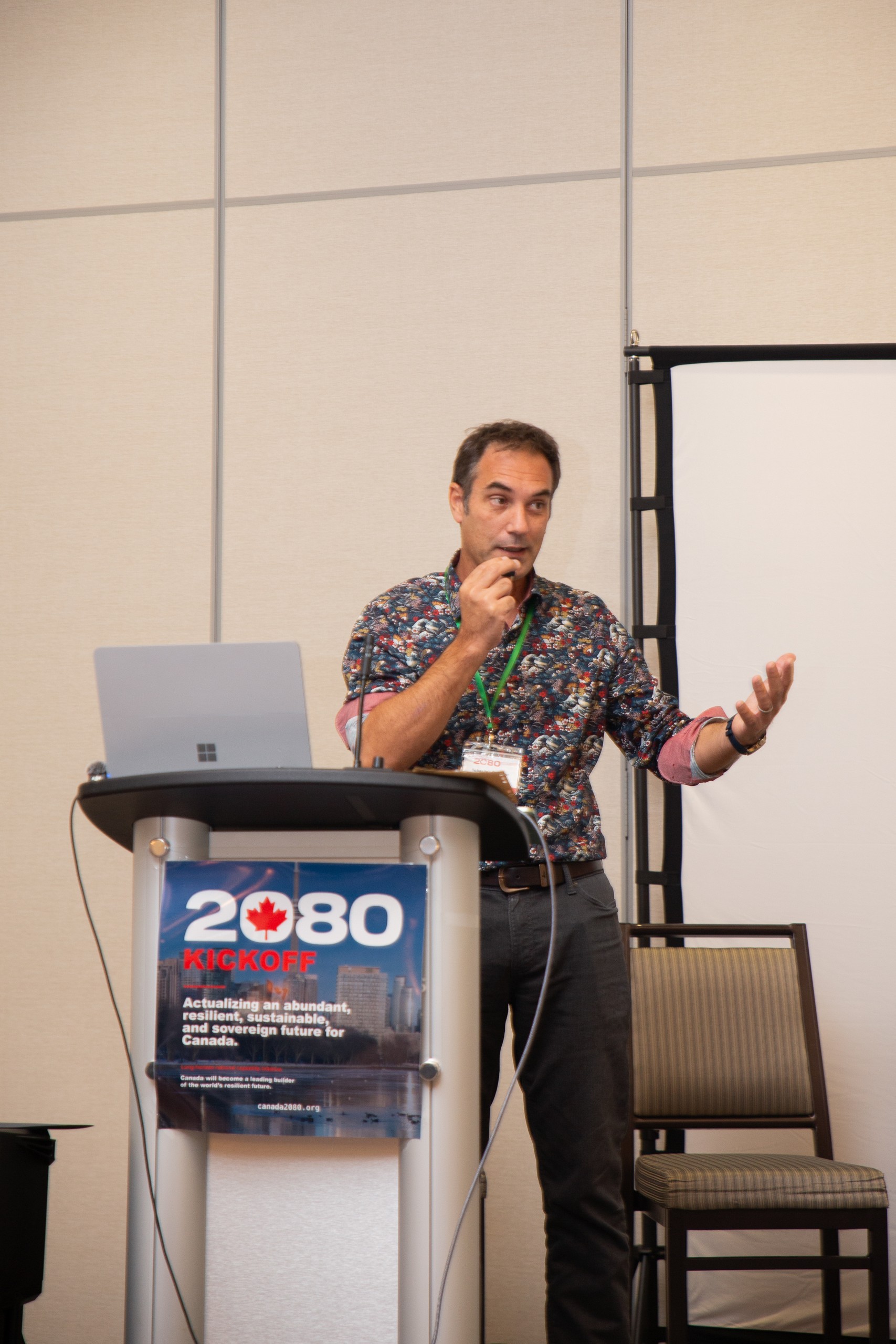 At the podium.
-
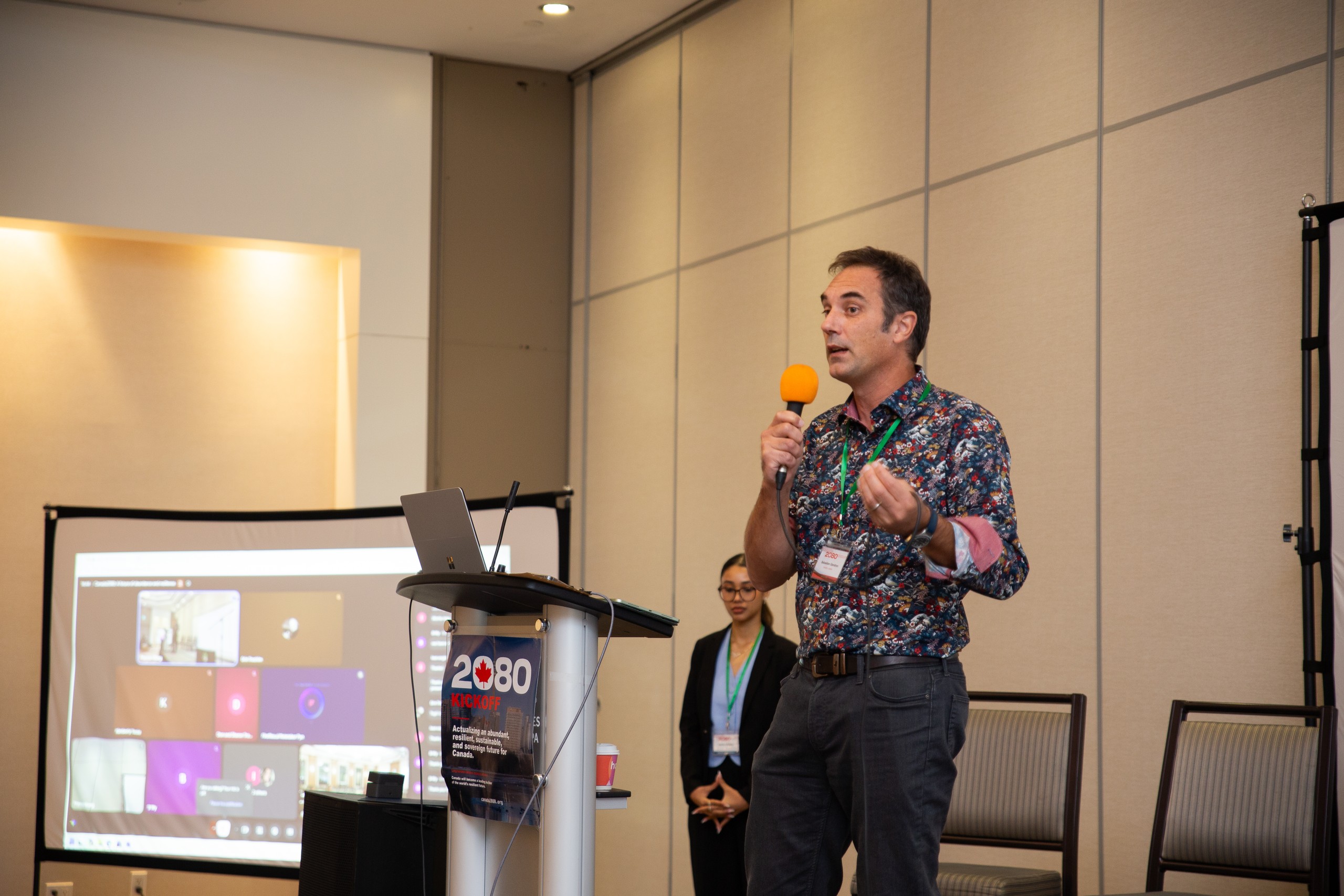 At the microphone.